
You can learn how to stay motivated learning ASL by defining a clear personal purpose and actively engaging with the local Deaf community. Consistent practice with a study partner and focusing on practical conversation starters will help you overcome common learning plateaus; furthermore, immersing yourself in Deaf culture ensures long term success.
Learning American Sign Language often begins with a surge of excitement as you master the alphabet and basic greetings, yet many students eventually hit a frustrating wall where progress feels stagnant. You might find yourself stuck in a cycle of memorizing vocabulary lists without feeling any closer to meaningful conversation. This plateau is a natural part of the linguistic journey, but failing to navigate it can lead to burnout or abandonment of your goals. To achieve true fluency, you must shift your focus from rote memorization toward cultural inclusion and practical, daily application. In this guide, we will examine the psychology behind the ASL learning dip and provide actionable strategies to rebuild your momentum. You will learn how to refine your practice habits, engage authentically with the Deaf community, and choose the right training methods to ensure your skills continue to evolve.
The Wall: Why ASL Motivation Often Dips After the Basics
Initial excitement in an ASL journey is contagious. Mastering the manual alphabet or a handful of basic greetings provides an immediate sense of accomplishment. However, many students eventually hit a phase where progress feels stagnant. This shift is a predictable part of what linguists call the acquisition curve.
Unlike spoken languages that rely on auditory processing, ASL requires the development of visual muscles and a sharp sense of spatial awareness. You are not just memorizing definitions; you are training your brain to process three dimensional information and physical nuance in real time. This requirement often leads to a specific type of mental fatigue that can make even a short practice session feel surprisingly draining.
Beyond the physical and cognitive demands, emotional hurdles often emerge. A common sentiment shared by learners on community forums is the paralyzing fear of making a mistake. This anxiety often stems from a worry about being misunderstood or appearing disrespectful. When you are scared to sign because your hand shape might be slightly off, your momentum stalls.
Recognizing that these errors are a necessary part of linguistic growth is vital in understanding how to stay motivated learning ASL. Incorporating Deaf Awareness training can help bridge this gap by grounding your practice in cultural understanding, which replaces the fear of being wrong with a commitment to authentic communication.
Understanding the ASL Learning Plateau

The ASL plateau typically manifests as a disconnect between your expressive and receptive skills. You may feel confident signing basic sentences, yet find yourself completely lost when a Deaf person responds at a natural pace. This imbalance occurs because your brain is still translating word-for-word rather than processing visual concepts. Another hallmark of this stage is feeling stuck in Signed English, where you follow English word order instead of ASL grammar. While frustrating, this stagnation is actually a sign that your brain is reorganizing information.
It is vital to differentiate between merely learning vocabulary and truly acquiring a visual language. Many students search for ways of learning fast, but rapid memorization often leads to a shallow understanding that collapses during real conversation. Deep acquisition requires moving beyond lists to understand spatial agreement, facial expressions, and non-manual markers.
Feature | Vocabulary Learning | Visual Language Acquisition |
|---|---|---|
Process | Memorizing English-to-sign equivalents | Internalizing spatial concepts and grammar |
Speed | Fast initial progress | Slower, sustainable growth |
Result | Word-for-word translation | Fluid, conceptual communication |
When progress feels slow, remember that your mind is building the cognitive infrastructure needed for complex communication. Understanding this shift is essential for those utilizing ASL for families or professional settings, as it reframes the plateau from a failure into a necessary developmental phase. Shifting your focus from the quantity of signs to the quality of visual context is key to understanding how to stay motivated learning ASL during these quieter periods of growth.
Reframing Your Why: From Vocabulary Lists to Real Inclusion
When your progress feels like a struggle against an endless list of nouns, the solution is to reframe the purpose of your study. Motivation often falters when it is centered entirely on personal achievement. By shifting your perspective from my skill to their access, the labor of learning becomes a form of advocacy. Every sign you master is a bridge built for a neighbor in Grayslake, a student in your classroom, or a colleague in the office.
True fluency begins with Deaf Awareness training, which provides the foundation of respect needed for genuine interaction. When you view ASL as a tool for inclusion rather than a set of flashcards, the stakes change. You are no longer just memorizing handshapes; you are ensuring that a Deaf individual is not excluded from a conversation. This commitment to equity provides a far more sustainable drive than the desire to simply finish a curriculum level.
Participating in community-based ASL programs helps solidify this connection. It transforms the language from an abstract academic subject into a living relationship. Seeing the direct impact of your communication on another person’s ability to participate fully in society is the most effective way to understand how to stay motivated learning ASL. This shift in mindset moves you from a passive student to an active ally.
Practical Daily Habits for Consistent Progress

Moving from advocacy to action requires a routine that survives your busiest days. The most common pitfall for those searching for ways to learn at home is scheduling study blocks that are too long to maintain. Instead, adopt the five minute rule. By committing to just five minutes of practice each day, you bypass the brain's natural resistance to perceived effort. Consistency always beats intensity; fifteen minutes spread across three days is significantly more effective for linguistic retention than a single hour-long session once a week.
Integrating micro-habits makes practice feel like a natural part of your day rather than an item on a to-do list. Consider these three specific exercises:
The Commuter's Drill: While driving or riding through Grayslake, fingerspell the license plates of cars around you. This builds the muscle memory needed for fluid letter transitions and trains your brain to process alphanumeric sequences without hesitation.
Mirror Narrations: During your morning routine, narrate your actions in signs while looking in a mirror. Describe brushing your teeth or picking out clothes. This helps you monitor your own handshapes and facial expressions in real time.
Captions-Off Challenge: Watch five minutes of ASL content daily with the captions disabled. Do not worry about catching every word. Instead, focus on the signer's body language and the flow of the conversation to build receptive stamina.
These habits are particularly useful for those utilizing ASL for families who may only have small pockets of time between household responsibilities. This steady drip of engagement is a core secret of how to stay motivated learning ASL, as it prevents the frustration of feeling like you are starting over after a long break. By making the language a constant, low-pressure presence, you maintain the baseline skills needed to participate fully in community-based ASL programs or professional training.
How to Practice ASL Alone Without Losing Momentum
While micro-habits build rhythm, mastering how to practice ASL every day alone requires specific diagnostic tools. The most effective method is using your smartphone to record yourself signing a short story or a daily recap. By reviewing the footage a few days later, you can evaluate your expressive clarity from a receptive perspective. If you struggle to understand your own handshapes or movement, it indicates exactly where your physical precision needs adjustment.
Another powerful solitary technique is thinking in signs. As you move through your day, try to visualize the sign for every object you encounter. Instead of just seeing a table, mentally trigger the visual concept of the sign. This strengthens the neural pathways between your environment and your target language without requiring a partner. It is a low-stakes way to keep your brain in a visual-spatial mode.
However, solitary practice has a ceiling. Without external correction, you risk the fossilization of mistakes, where incorrect handshapes or grammatical errors become permanent habits. This is particularly risky for those using ASL for families, as errors can be passed down to other learners in the household. To understand how to stay motivated learning ASL over the long term, you must eventually transition from the mirror to the community. Solo drills are excellent for muscle memory, but they cannot replace the nuanced feedback found in community-based ASL programs or direct interaction with Deaf individuals.
The Role of the Deaf Community in Sustaining Commitment
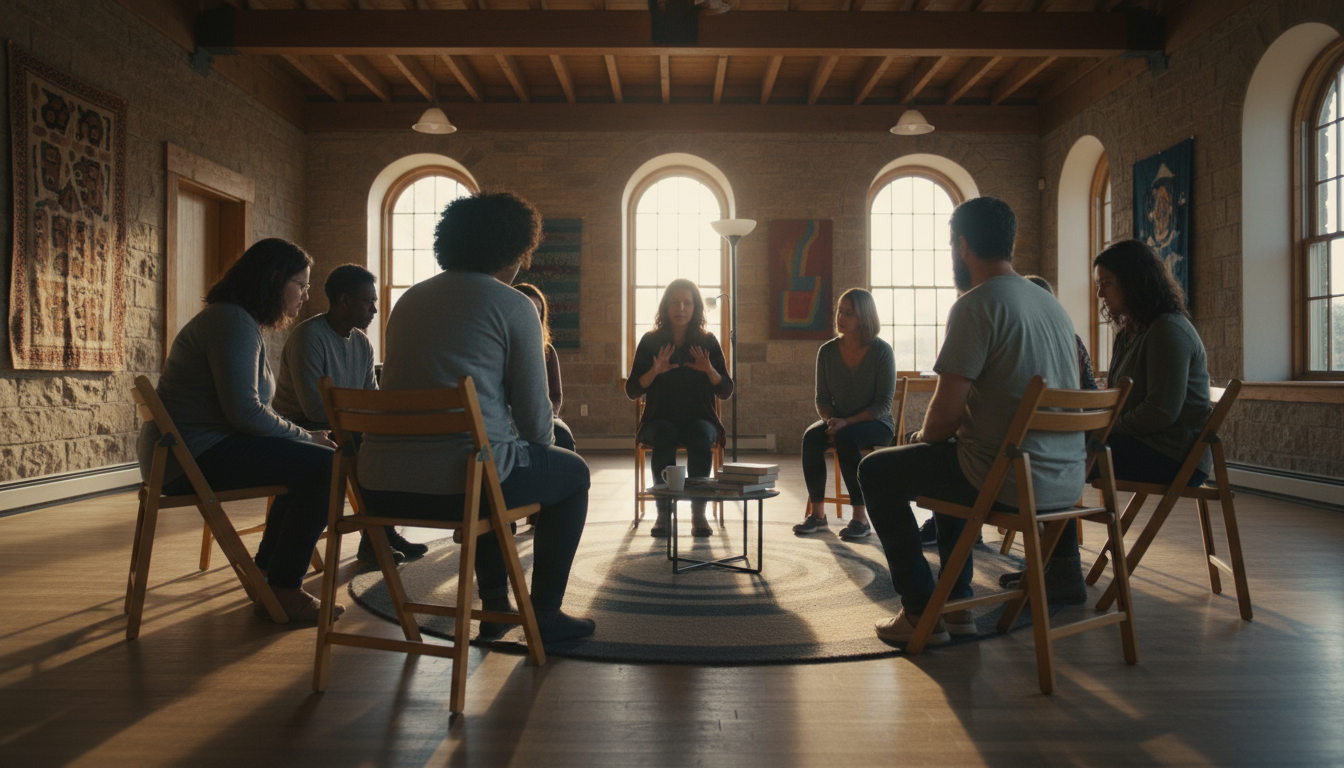
Practicing alone can only take a learner so far before the lack of human connection becomes a significant barrier to growth. Learning in isolation is a primary reason students lose steam; when ASL is treated as a solitary academic subject, it lacks the pulse of real-world application. Engaging with the Deaf community transforms the experience from a cold memorization task into a meaningful relationship. This shift is vital for understanding how to stay motivated learning ASL because it provides a tangible reason to keep showing up.
It is crucial to recognize the ethical component of your studies. ASL is not a commodity or a casual hobby to be checked off a list; it is a visual language that belongs to the Deaf community. True progress requires a commitment to the people who use the language as their primary means of expression. By participating in community-based ASL programs, you move beyond simple handshapes and begin to understand the cultural nuances and history that define the language.
When you interact with Deaf instructors, the purpose behind your learning becomes concrete. You are no longer just studying a manual; you are developing the ability to share space, ideas, and respect with another person. This foundation of Deaf Awareness training ensures your motivation is rooted in allyship and inclusion. Direct engagement provides the accountability and inspiration that self-paced tools simply cannot replicate.
Finding the Right Support: Live Training vs. App Learning
Self-paced apps serve as convenient starting points for building a basic vocabulary, but they often lack the interactive depth required to move past an intermediate plateau. Algorithms cannot correct a misplaced thumb or a missing facial expression, leading to a false sense of proficiency. Conversely, live online classes through Easy Signing LLC introduce a level of accountability that solo learners lack. Having a Deaf instructor observe your signing in real time ensures that your foundation is built on accurate handshapes and appropriate cultural etiquette.
This interactive environment provides immediate feedback, which is crucial for those developing ASL for families. When you know a group of peers and an instructor are waiting for you, the urge to skip a session diminishes. For students in Grayslake, Illinois, or those signing in from elsewhere, this structure is a primary factor in understanding how to stay motivated learning ASL.
Feature | Self-Paced Apps | Live Interactive Training |
|---|---|---|
Feedback | Generic or non-existent | Real-time, personalized correction |
Cultural Depth | Limited to signs only | Includes Deaf Awareness training |
Accountability | Low; easy to ignore notifications | High; scheduled sessions and group support |
Grammar | Often linear or Signed English | Focus on visual-spatial ASL syntax |
The transition from a solitary app to community-based ASL programs replaces passive consumption with active participation. Live training bridges the gap between knowing a sign and using it effectively in a conversation, ensuring you have the support needed to turn a temporary interest into a lifelong skill.
Staying motivated while learning American Sign Language requires patience and consistency. By setting small goals and celebrating every milestone, you can successfully navigate through those common learning plateaus. While independent study is a great start, having a guided path can make the journey much more rewarding. If you want expert help to deepen your skills or involve your loved ones, our Personal & Family ASL program offers the support you need. Professional guidance ensures you stay on track while making meaningful progress with your signing.


