Learning ASL for emergency situations empowers first responders and workplace staff to provide immediate, life-saving communication to Deaf and hard-of-hearing individuals during crises. Mastering basic signs for medical needs and safety instructions bridges critical gaps in care; it ensures that all individuals receive equal access to emergency assistance before a professional interpreter arrives.
In a high-stakes emergency, clear communication is the difference between safety and catastrophe. For first responders and workplace managers, the inability to exchange vital information with a Deaf or hard of hearing individual creates a dangerous bottleneck in care. These moments of crisis require more than just intent; they demand practical tools to ensure every person receives instructions and medical attention without delay. At Easy Signing LLC, we understand that accessible safety is a non-negotiable standard for any professional environment. This guide provides a comprehensive look at essential ASL signs for paramedics and clinical teams, alongside strategic non-verbal techniques for chaotic scenes. You will also discover how to implement robust emergency preparedness plans for your Grayslake business or remote team, ensuring that when the sirens sound, your communication remains unbreakable.
The Critical Role of ASL in Life Safety Situations
In any crisis, standard communication channels are the first to fracture. Sirens, shouting, and high-speed verbal instructions form the backbone of traditional safety protocols, yet these methods fail the Deaf and Hard of Hearing community. For these individuals, an emergency is twice as stressful. Not only is there a physical threat, but there is also a critical lack of accessible information regarding what is happening or where to go.
Generic safety protocols often rely on auditory alerts, which leaves a significant portion of the population in the dark during a fire, chemical spill, or medical crisis. True inclusion requires a shift toward visual and tactile communication. While federal regulations emphasize the need for qualified interpreters, a professional may not arrive for thirty minutes or more. The most dangerous period is the gap between the onset of an emergency and the arrival of a specialist.
This is where basic proficiency in ASL for emergency situations becomes a literal lifesaver. Easy Signing LLC focuses on fostering confidence during these high stakes moments by providing the bridge needed to stabilize a situation. Through targeted Deaf Awareness Training, responders and safety officers learn to facilitate immediate understanding, ensuring no one is left behind because of a communication barrier. Establishing this initial connection reduces panic and allows for a more controlled, effective response.
Essential ASL for First Responders and Paramedics
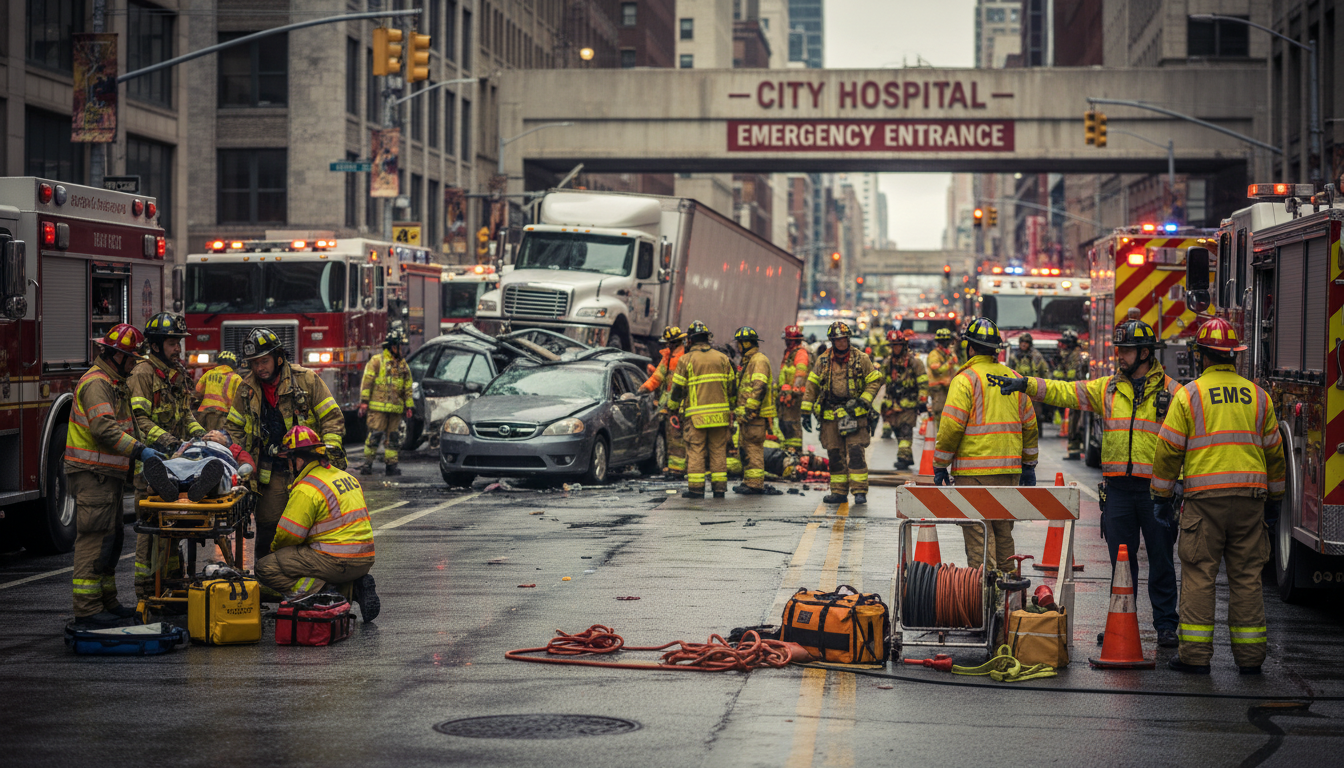
First responders serve as the first line of defense during a crisis, yet a language barrier can stall life-saving interventions. When approaching a Deaf individual at a scene, the initial contact sets the tone for the entire encounter. According to Deaf culture etiquette, the best way to gain attention is through a light, firm tap on the shoulder or a rhythmic wave within the person’s line of sight. Responders should avoid grabbing an individual's arm or shoulder abruptly, as this can be perceived as aggressive, especially in high-adrenaline situations like a car accident or a fire evacuation.
Responders frequently ask about the specific signs for their roles. To sign "Emergency," you form the letter 'E' with your hand, which involves curling your fingers to touch your thumb, and shake the handshape slightly at chest level. When asked, "What is the ASL sign for EMT?", practitioners often fingerspell the letters E-M-T or point to their uniform badge while signing "Help." These simple identifiers establish your authority and intent immediately, reducing the patient's anxiety.
Visibility is a paramedic's most powerful tool when utilizing ASL for emergency situations. It is critical to keep your face visible and well-lit. While medical masks are often necessary for safety, they eliminate the ability for a Deaf person to read lips or see facial expressions. In ASL, facial expressions are not just emotional cues; they carry grammatical weight. For instance, furrowed brows often indicate a "who, what, or where" question. If a mask must be worn, responders should rely more heavily on clear, deliberate gestures and visual tools to bridge the gap.
In medical crises, the goal is stabilization. Learning basic signs for "Stay," "Safe," and "Wait" allows police and fire rescue teams to manage a scene effectively until a certified interpreter arrives. These foundational skills are a core component of Workplace and Professional Training, enabling responders to gather essential information during the first few golden minutes of an emergency.
Healthcare Teams and Clinical Safety Communication

The triage period in a clinical setting is a race against time, where the speed of information gathering directly impacts patient outcomes. While hospitals are legally required to provide certified interpreters, the reality of the intake process is that clinicians must often make split-second decisions before an interpreter arrives. Basic ASL for emergency situations allows nurses and doctors to conduct an immediate assessment of critical factors, such as the level of pain or the presence of life-threatening allergies. Relying solely on a patient’s ability to write on a clipboard can lead to delays or misinterpretations, especially if the patient is in shock or has limited dexterity.
Clinicians should master foundational signs to facilitate this intake. To sign Hospital, form an 'H' handshape with your dominant hand and draw a cross on your opposite upper arm. For Hurt, point your index fingers toward each other and twist them in a circular motion near the area of discomfort; this is particularly effective because the location of the sign indicates where the pain is centralized. To ask about Medication, place your non-dominant hand flat, palm up, and use the middle finger of your dominant hand to stir or rub the center of the palm.
Incorporating Workplace and Professional Training for clinical staff ensures that these signs are paired with visual aids. Using printed communication boards that feature both ASL diagrams and universal icons allows a patient to point to their symptoms or medical history. This multi-modal approach reduces the risk of diagnostic errors during the high-pressure triage phase. By focusing on these initial minutes of contact, healthcare teams can stabilize the patient and gather vital data while waiting for a professional interpreter to facilitate more complex discussions.
Workplace Safety and Emergency Preparedness for Employers

While healthcare settings focus on immediate patient stabilization, the broader professional landscape requires a similar commitment to communication during crisis events. Effective workplace safety extends beyond physical infrastructure; it requires a proactive approach to communication. In environments like warehouses, schools, or open-plan offices, traditional auditory alarms fail to reach every employee. Inclusive emergency preparedness starts with the installation of high-intensity strobe lights in all areas, including restrooms and storage rooms, to ensure visual notification of a crisis. However, technical solutions must be paired with human protocols.
During a fire drill or an active shooter situation, standard verbal instructions can leave Deaf employees at a severe disadvantage. Employers should implement a designated buddy system or assign safety wardens who are trained in specific visual cues. In high-stakes lockdowns where silence is mandatory, using ASL for emergency situations becomes a strategic advantage. It allows safety teams to communicate directions like 'hide' or 'stay quiet' without making a sound.
Businesses should ensure that every safety response team has at least one member who has undergone Workplace and Professional Training. This professional development bridges the gap between a generic evacuation plan and a truly inclusive one. Rather than relying on written notes, which are impractical during a fast-moving evacuation, a trained employee can provide immediate, clear instruction. This level of Deaf Awareness Training ensures that in the event of a real crisis, the entire workforce can move to safety in unison, reducing panic and preventing the isolation of individuals who cannot hear the alarm.
Top 10 ASL Signs for Emergency Situations
Building on the structural protocols for workplace safety, responders need a specific vocabulary they can deploy immediately. In high-pressure moments, clarity is far more important than perfect hand placement. These ten signs serve as universal tools for safety officers and community leaders, providing a baseline for establishing status and intent using ASL for emergency situations.
HELP: Place your dominant fist, thumb up, on your flat non-dominant palm and lift both hands together.
EMERGENCY: Form an 'E' handshape, fingers curled to touch the thumb, and shake it quickly at chest level.
HURT: Point your index fingers toward each other and twist them in a jabbing motion near the site of the injury.
SICK: Use your middle fingers to touch your forehead and stomach simultaneously.
DOCTOR: Tap your dominant fingertips against the pulse point of your non-dominant wrist.
POLICE: Form a 'C' shape with your hand and tap it over your heart, mimicking the position of a badge.
FIRE: With palms facing you, wiggle your fingers in an upward motion to simulate rising flames.
STAY: Make a 'Y' shape, thumb and pinky extended, and push it firmly downward once.
WAIT: Hold both hands in front of you with palms facing your chest and wiggle all ten fingers.
ARE YOU OKAY?: Point to the person, then tap your thumb to the center of your chest with an open hand while raising your eyebrows to indicate a question.
Mastering these basics through Deaf Awareness Training ensures that even without a translator, you can provide immediate direction and comfort. The goal is not fluency, but the successful transmission of life saving information when every second counts.
Beyond Vocabulary: Non-Verbal Strategies in a Crisis
Mastering a core vocabulary is the first step, but real-world emergencies are rarely predictable. If you forget a sign or encounter a complex scenario, rely on natural gestures. Use your hands to mime clear actions, such as drinking water or sitting down. These universal movements provide immediate context when specific ASL for emergency situations escapes you.
Responders should also leverage physical tools. Typing a message in a large font on a smartphone or using a notepad can bridge gaps in technical information like names or medication details. However, avoid the common mistake of shouting. Increasing your volume does not make you more intelligible; instead, it distorts your mouth and facial expressions, making it harder for a Deaf person to utilize residual hearing or lip-reading. Maintaining a calm, clear face is a vital component of Deaf Awareness Training. By prioritizing visual clarity over volume, you ensure the individual remains calm and informed. These strategies complement formal Workplace and Professional Training by providing a reliable fallback when specialized tools are unavailable.
Customized Emergency ASL Training in Grayslake and Online

Easy Signing LLC, based in Grayslake, Illinois, bridges the gap between basic vocabulary and real-world application. While generic apps offer static video tutorials for ASL for emergency situations, they lack the real-time, interactive feedback essential for crisis readiness. Our live, online sessions provide a structured environment where first responders and HR teams practice high-pressure scenarios alongside expert instructors. We customize each Workplace and Professional Training curriculum to address the specific risks faced by healthcare providers, schools, or corporate offices. This personalized Deaf Awareness Training ensures staff members receive immediate correction on hand shapes and facial grammar, building the muscle memory required to communicate effectively when every second counts.
Effective communication during a crisis is not just a skill; it is a vital safety requirement. By learning essential ASL signs, your team can provide inclusive support when every second counts. If you want expert help implementing these strategies within your organization, our Workplace & Professional Training offers tailored solutions for your specific needs. Taking this step ensures that your responders are confident and prepared to assist everyone in your community, regardless of how they communicate.


