
Effective deaf awareness for conferences and professional development requires integrating comprehensive training, hiring Deaf keynote speakers, and moving beyond simple interpretation to ensure full cultural and linguistic access. Organizers can achieve this by implementing early accessibility timelines and gathering direct feedback from the community to foster truly inclusive professional environments.
Even the most meticulously planned conference can fail to be inclusive if organizers view accessibility as a checkbox. You hire an American Sign Language interpreter, yet your Deaf attendees still feel isolated during networking breaks and interactive sessions. This gap exists because technical compliance is not the same as true cultural awareness. When your staff and hearing attendees lack the tools to engage across linguistic boundaries, professional development opportunities remain fundamentally limited. In this guide, we explore why passive accessibility is insufficient for modern events. You will learn how to integrate Deaf awareness as a core competency, transform networking spaces, and choose the right training models to ensure your next event is truly inclusive for every professional.
Beyond Compliance: Why Passive Accessibility is Not Enough
Compliance in event planning often stops at the stage. Many organizers hire an American Sign Language (ASL) interpreter and provide CART captioning, viewing these as completed checklist items for legal accessibility. However, this approach represents passive accessibility; it fulfills a requirement but fails to foster true inclusion. One of the primary challenges faced by the Deaf community in professional settings is the "social bubble" created when accessibility is treated as a specialized accommodation for a few rather than a cultural standard for everyone.
Standard conference setups often leave Deaf attendees isolated. While an attendee may have an unobstructed view of the interpreter during a keynote, the social infrastructure of the event often fails. The moments between sessions, such as networking in the hallways or sharing a meal, remain inaccessible. Without Deaf Culture and communication tips, hearing attendees often avoid interaction because they are unsure of how to engage respectfully. This turns a professional development event into a series of lectures for the Deaf attendee, stripping away the collaborative value that makes conferences worth attending.
Integrating Deaf awareness for conferences and professional development shifts the narrative from merely accommodating a minority to enriching the experience for the entire audience. When a program includes active inclusion, the focus moves toward Workplace and Professional Training that empowers every attendee. By providing the audience with the basic tools to communicate directly, organizers dismantle the barriers that standard setups inadvertently reinforce. This proactive stance ensures that Deaf Awareness Training is viewed as a shared skill, not just a logistical service tucked in the corner of a room.
The Critical Gap Between ASL Interpretation and Deaf Awareness Training
A common misconception in event planning is that the presence of an ASL interpreter solves the inclusion puzzle. In reality, interpreters are linguistic professionals hired to facilitate communication of the formal program; they are not social facilitators for the audience. While they expertly translate a keynote or a panel discussion, they do not bridge the interpersonal gap during coffee breaks, lunch hour, or impromptu hallway networking. When the stage lights go down, the interpreter’s primary role pauses, often leaving Deaf professionals in a room full of people who lack the confidence to say hello.
Providing Deaf Awareness Training as part of your event fills this specific void. Unlike standard Workplace and Professional Training that focuses only on legal logistics, awareness education focuses on the hearing attendees. It transforms them from passive observers into active participants who can engage in direct, peer-to-peer interaction. By learning Deaf Culture and communication tips, hearing attendees gain the tools to navigate a conversation without needing a third party to stand between them. True Deaf awareness for conferences and professional development ensures that accessibility is a shared responsibility, allowing for genuine connection that an interpreter, by professional definition, cannot provide.
Transforming Networking for Deaf and Hard of Hearing Professionals

The true value of a conference often happens in the lobby, not the auditorium. While interpreters facilitate the formal exchange of information, the informal social infrastructure is where partnerships form and careers advance. Integrating a short, 30 minute breakout session into your program can fundamentally change this dynamic. By teaching hearing attendees basic, functional signs like "Nice to meet you," "What is your job?" and "Thank you," you provide the entry point for direct connection. These small gestures signal respect and a willingness to engage, breaking the silence that typically surrounds Deaf professionals during mixers.
Understanding the 90 percent rule provides crucial context for why this effort matters. In Deaf culture, this rule notes that 90 percent of Deaf children are born to hearing parents; historically, 90 percent of those parents do not learn to sign fluently. This creates a lifelong experience of being surrounded by people who cannot communicate in one’s primary language. When hearing colleagues at a professional event take the initiative to learn even basic Deaf Culture and communication tips, they are actively countering a historical pattern of exclusion.
These skills offer long term value for workplace inclusion. A manager who learns basic signs at a conference brings that inclusive mindset back to the office, improving daily interactions with Deaf staff or clients. This type of Workplace and Professional Training ensures that the benefits of Deaf Awareness Training extend far beyond the final keynote, fostering a culture where every professional can participate in the social conversations that drive innovation.
Deaf Awareness as a Core Professional Development Competency
Moving beyond the social benefits of interpersonal interaction, organizers should view Deaf awareness as a fundamental leadership competency. In the evolving landscape of 2025 and 2026, workplace trends indicate a significant shift toward prioritizing soft skills and inclusive communication. Hiring managers and HR professionals are no longer looking for mere compliance; they are seeking leaders who can foster environments where every employee, including those who are Deaf or hard of hearing, can thrive.
Integrating Deaf awareness for conferences and professional development transforms a standard event into a high-value learning experience. Because conferences are a primary form of professional development, they must reflect modern DEI standards that go beyond the stage. Providing Workplace and Professional Training during these events equips attendees with a transferable skill set they can bring back to their home offices. This training helps managers recognize the nuances of Deaf Culture and communication tips, which reduces friction in future team collaborations and project management. By treating Deaf Awareness Training as a core skill rather than an optional add-on, organizations signal that inclusion is a measurable professional asset. This proactive approach ensures that staff are prepared for a globalized market where adaptive communication is the hallmark of a sophisticated professional.
Practical Ways to Integrate Deaf Awareness into Your Event Program
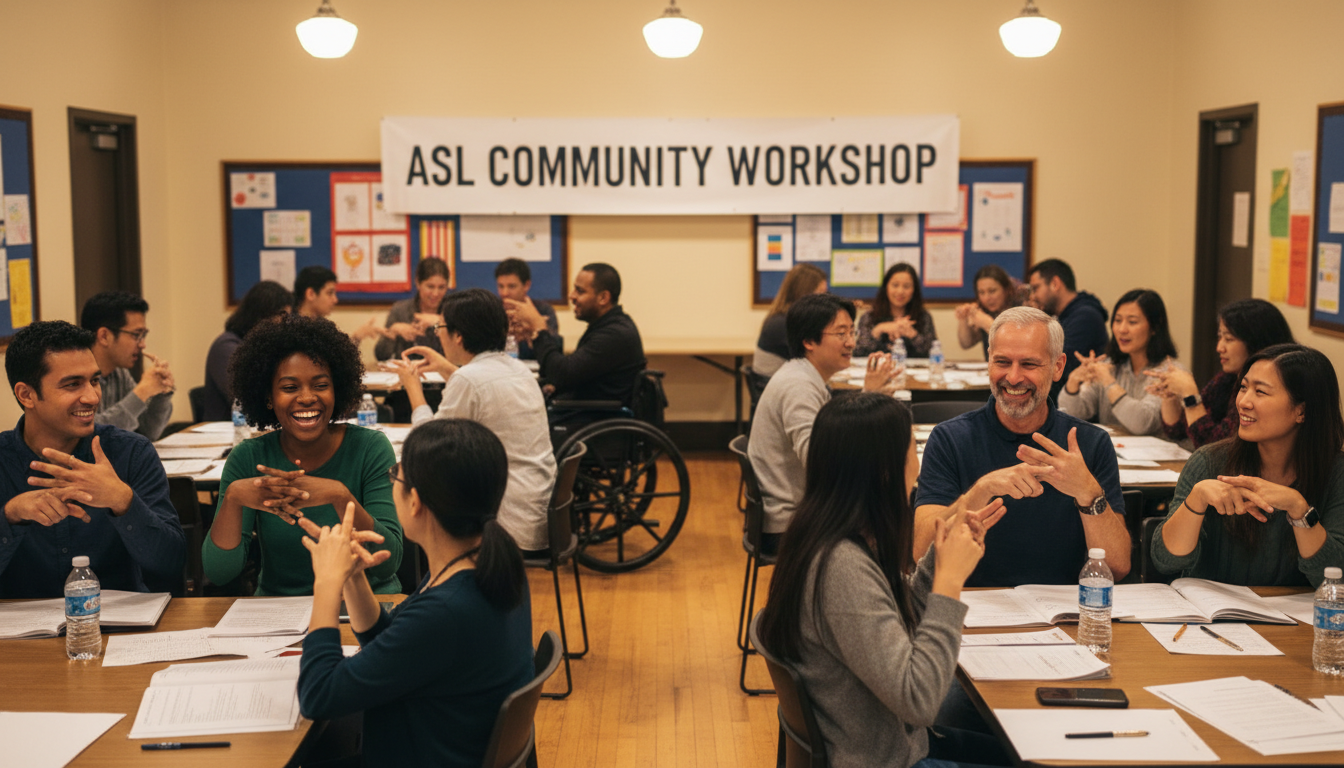
Implementing Deaf awareness for conferences and professional development effectively involves weaving education into the event's natural flow. One impactful approach is a Sign Language 101 morning kick-off. This ten to fifteen minute session introduces basic greetings and professional terminology, setting an inclusive tone before the first keynote begins. It signals to all attendees that the environment is designed for everyone to interact.
For deeper engagement, consider a dedicated Deaf culture keynote or interactive lunch-and-learns. These formats allow for nuanced Deaf Culture and communication tips that help attendees navigate complex social dynamics. When hiring a professional speaker, prioritize trainers who offer more than a standard lecture. The goal is to find live, customized instruction, such as the sessions provided by Easy Signing LLC, which adapt to the specific industry or community group attending your event.
Organizers can also incorporate structured networking breaks where attendees practice what they have learned. This moves Deaf Awareness Training from a passive listening exercise into a practical application of skills. By positioning this Workplace and Professional Training as an interactive element of the program, you ensure that inclusive communication remains a visible and valued priority throughout the entire conference schedule.
The Role of Staff and Volunteer Training Before the Event

Inclusive event planning often fails if the first person an attendee meets is unprepared. Frontline staff, including registration teams, security, and ushers, serve as the primary gateway to the conference experience. If a Deaf professional approaches a registration desk and the staff member panics, looks away, or over-articulates, the professional atmosphere is immediately compromised. Providing Deaf Awareness Training for staff ensures that these initial interactions remain respectful, efficient, and dignified.
Effective training teaches volunteers to provide assistance without being overbearing or assuming helplessness. Staff should be trained in visual cues and basic signs to direct attendees to key locations like the "restroom," "elevator," or "main hall." This specific Workplace and Professional Training prevents the common mistake of shouting or grabbing an attendee’s arm to get their attention. Instead, staff learn to maintain eye contact and use clear, professional gestures.
Integrating these skills into your pre-event prep is a vital part of Deaf awareness for conferences and professional development. At Easy Signing LLC, we offer tailored sessions for community groups and businesses that focus on these high-traffic touchpoints. By equipping your team with Deaf Culture and communication tips, you ensure that every point of contact, from the security gate to the ushering line, reinforces a culture of true inclusion.
Deaf Awareness Training in Grayslake and Beyond: Live Versus Pre Recorded Learning
Selecting the right delivery format is essential when integrating Deaf awareness for conferences and professional development. While pre recorded modules offer convenience, they lack the interactive dialogue necessary to grasp the nuances of visual communication. Static videos cannot answer specific questions about regional signs or clarify the subtleties of facial expressions, which are vital components of American Sign Language.
Easy Signing LLC, based in Grayslake, Illinois, specializes in live instruction that bridges the gap between theory and practice. Our live online sessions provide a platform for real time Q&A, allowing participants to receive immediate feedback on their technique. This dynamic approach is far superior to generic modules because it adapts to the specific needs of the audience, whether they are in a corporate boardroom or a community center. Investing in live Workplace and Professional Training ensures that the instruction is memorable and accurate. By prioritizing interactive Deaf Awareness Training, organizers give their attendees the confidence to move beyond Deaf Culture and communication tips and into meaningful, real world application.


