AI is unlikely to fully replace ASL interpreters because current technology cannot replicate the facial grammar and cultural nuances essential to human communication. While automated tools provide a useful bridge when human professionals are unavailable, the ongoing need for accuracy and connection suggests that the question will AI replace ASL interpreters remains answered with a no for the foreseeable future.
As you invest hours into mastering handshapes and spatial awareness, you might wonder if a computer will eventually render your hard work obsolete. The headlines about artificial intelligence frequently suggest that human translation is a dying craft, leaving many ASL students and professionals feeling uncertain about their future roles. However, American Sign Language is far more than a series of mechanical gestures; it is a complex, living language rooted in cultural nuances and intricate facial grammar. In this article, we will examine why AI currently fails to capture the essential non-manual markers that define meaning. You will learn about the critical safety risks of translation errors and why the Deaf community continues to prioritize human connection over algorithmic efficiency. By understanding these limitations, you can see how technology functions as a supplementary tool rather than a replacement for the expert human touch.
The Rise of AI Sign Language Translation: What Is Actually Happening?
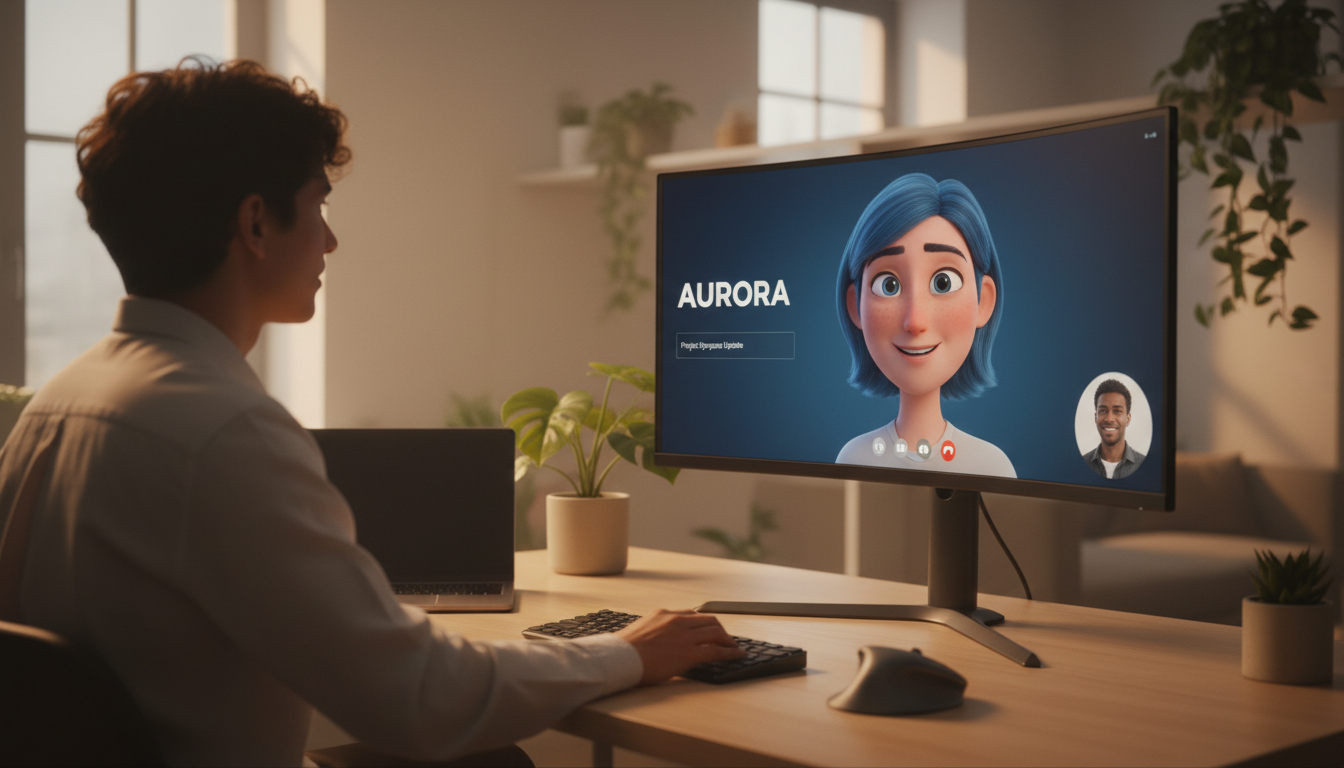
AI has made significant strides in computer vision, leading many to ask, will AI replace ASL interpreters in the near future? Today, we see mobile apps that can identify specific handshapes or fingerspelling with impressive speed. This is technically sign recognition. It is a feat of engineering where a camera tracks skeletal points on a hand to categorize a gesture. However, recognition is not the same as translation. True translation requires a deep understanding of linguistic intent, which most current software lacks.
Most existing tools function best in highly controlled environments with neutral backgrounds and slow, isolated signs. They often struggle with the fluid, 3D nature of real-world American Sign Language. In a natural conversation, signs blend together and rely on spatial orientation and movement speed to convey meaning. While these technological developments are exciting tools for basic vocabulary practice, they do not yet capture the dynamic communication used daily in the Deaf community.
For organizations seeking Deaf Awareness training or customized training for businesses, it is vital to understand that technology currently provides a snapshot, not a bridge. Families starting out with ASL classes for families often find that while apps help with single words, they cannot replicate the spatial logic and flow of a live human interaction. Learning to navigate these nuances remains a deeply human endeavor.
The Facial Grammar Gap: Why AI Struggles Beyond the Hands
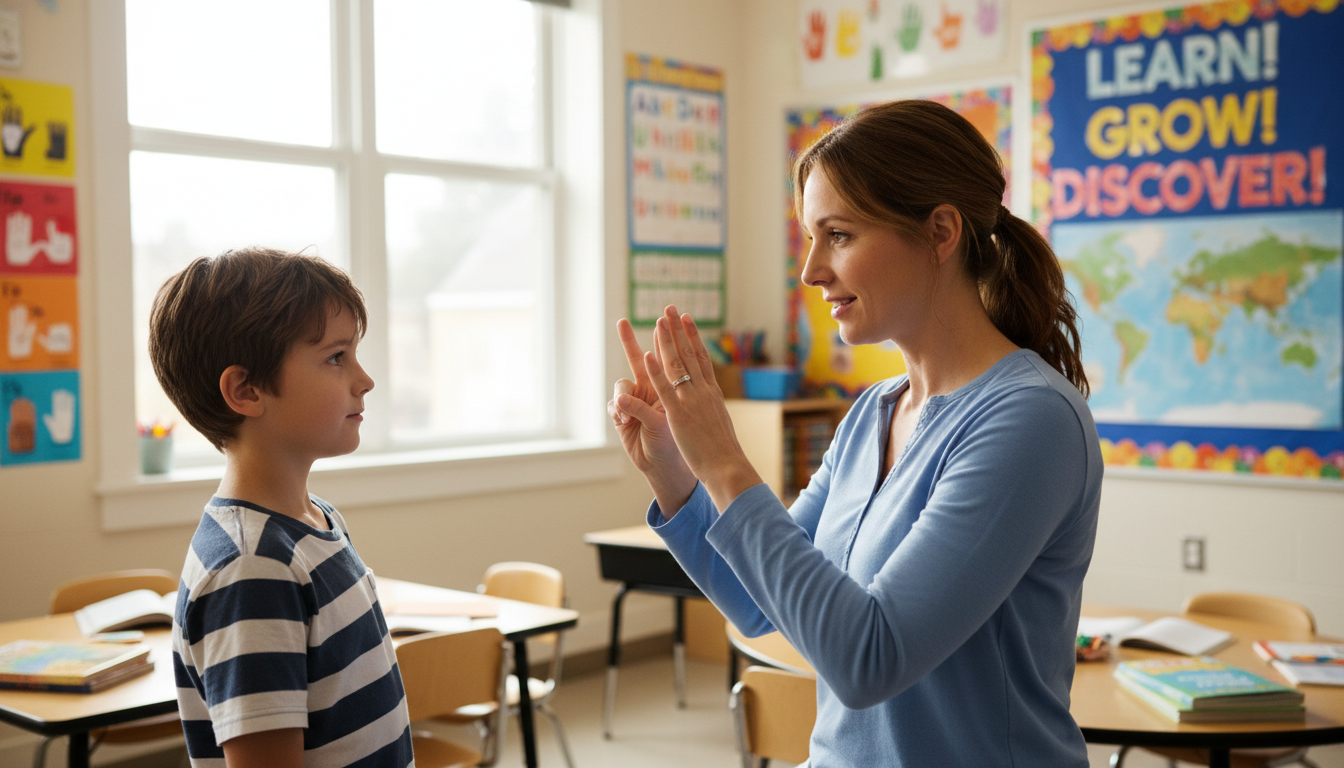
While handshapes are the most visible part of American Sign Language, they are only a fraction of the linguistic data being transmitted. To truly understand why the question will AI replace ASL interpreters remains a firm "no" for the foreseeable future, one must look at Non-Manual Markers (NMMs). These are the grammatical foundations of ASL that occur on the face and body. Without NMMs, ASL becomes a series of vocabulary words without any syntax, much like a person speaking English in a monotone voice without using any punctuation or inflection.
Computer vision models are increasingly adept at tracking the 21 key points on a human hand. However, these models often fail to capture the subtle shifts in the shoulders, a slight tilt of the head, or the specific tension in a mouth morpheme. These elements are not decorative; they are functional. For instance, a specific mouth shape can change the meaning of a sign from "working" to "working effortlessly" or "working with great difficulty." If an AI cannot distinguish these facial morphemes, the translation loses its fundamental meaning.
Eyebrow position is perhaps the most critical grammatical marker that current technology misses. In ASL, a statement and a yes or no question can use the exact same handshapes in the exact same order. The only way a viewer knows a question is being asked is by observing the signer's raised eyebrows. Conversely, if the eyebrows are furrowed, it signals a "WH" question such as who, what, when, where, or why. AI systems currently lack the sophisticated facial recognition needed to consistently map these markers to their specific linguistic functions.
For those enrolled in ASL classes for families or professionals undergoing Deaf Awareness training, learning to use NMMs is often the most challenging yet rewarding part of the process. It is the difference between signing at someone and communicating with them. This complexity is why customized training for businesses focuses so heavily on expressive skills. If the technology cannot perceive the grammar, it cannot translate the language.
Context and Cultural Nuance: The Deaf Community Perspective
Language is inseparable from culture, and technology lacks the lived experience that defines the Deaf community. A human interpreter understands the historical context of a conversation, recognizing when a specific sign choice reflects a generational shift or a regional dialect. American Sign Language has "accents" just like spoken English. A signer in the Grayslake area or greater Lake County may use variations that differ from a signer on the West Coast. AI models trained on generic datasets often fail to recognize these regional nuances, resulting in a sterilized output that feels foreign and disconnected to the user.
Recent studies involving Deaf viewers highlight a recurring frustration with AI-generated signing: a total lack of prosody. Prosody is the natural rhythm, pace, and emphasis that gives a language its flow. Without it, signing becomes robotic and exhausting to watch, similar to reading a book with no spaces between words. AI frequently misses the subtle markers of sarcasm, irony, or deep emotional weight. While a computer might recognize the handshape for "fine," it cannot weigh the sincerity of that sign based on the social tension in a room. This nuance is a core focus of Deaf Awareness training, which teaches that communication is about the relationship between people, not just the transmission of signals.
For participants in ASL classes for families or those seeking customized training for businesses, the goal is authentic connection. A tablet screen cannot empathize or adjust its tone based on the gravity of a situation. When considering if will AI replace ASL interpreters, one must remember that an interpreter acts as a cultural mediator. They ensure that the intent of the speaker and the impact on the listener align. Technology can replicate a gesture, but it cannot yet replicate the soul of a language shaped by centuries of community resilience and shared history.
Safety and Ethics: The 5 Percent Error Problem

The gap between "mostly correct" and "safely translated" is where the question will AI replace ASL interpreters meets its most significant hurdle. In data science, a 95 percent accuracy rate is often considered a success. However, in specialized fields like healthcare or law, that remaining 5 percent represents a margin of error that can be life-threatening. A misunderstanding in medical discharge instructions, such as an AI failing to capture a negation in a dosage warning, has consequences that a software developer cannot remediate after the fact.
Unlike a line of code, a certified human interpreter operates under a strict Code of Professional Conduct. This framework ensures confidentiality, impartiality, and professional accountability. When an interpreter facilitates a conversation in a courtroom or an emergency room, they are not just providing a service; they are upholding a legal and ethical standard. If a misunderstanding occurs, a human can pause, clarify, and ensure the message is conveyed with 100 percent fidelity. AI lacks the judgment required to know when it has made a mistake or when a linguistic nuance requires further explanation.
For organizations considering customized training for businesses, it is essential to distinguish between convenience and compliance. AI may offer a low-stakes solution for a simple greeting or a basic directional question. Yet, it is not a replacement for professional interpreting services in high-stakes environments. Real inclusion, a core tenet of our Deaf Awareness training, requires prioritizing the safety and rights of the Deaf individual over the speed of a digital interface. Relying on an uncertified algorithm for critical communication bypasses the ethical safeguards that protect both the provider and the client.
Why Learning ASL Is Still Deeply Valuable in an AI Era

While the 5 percent error rate makes AI risky for professional settings, there is a more fundamental reason to pursue fluency beyond mere accuracy. Relying on a mobile app creates a physical barrier between two individuals. A tablet or phone becomes a middleman that forces both parties to look away from each other and toward a screen. In contrast, learning the language yourself acts as a bridge. It facilitates sustained eye contact, which is a cornerstone of Deaf culture and essential for building trust. For those enrolled in ASL classes for families, this direct connection is exactly what fosters a lasting bond that a digital interface simply cannot replicate.
Learning ASL also offers a significant cognitive return on investment. It engages the brain's spatial processing and visual memory in ways spoken languages do not, enhancing mental flexibility and multi-tasking skills. For businesses in Grayslake and the surrounding Lake County area, these skills provide a competitive edge in customer service. When a local shop owner or a healthcare professional uses basic signs learned through customized training for businesses, they create an immediate sense of belonging. Handing a customer a device with a translation app says that you can tolerate their presence; signing a clear "How can I help you?" says that you value their personhood.
This human element is why the debate over if will AI replace ASL interpreters often overlooks the primary goal of communication: connection. Real inclusion is not just about the cold exchange of data points. Deaf Awareness training teaches that while technology can be a useful backup for isolated words, it cannot replace the empathy and warmth of a human who has invested the time to learn your language. In an era increasingly mediated by algorithms, the choice to communicate person to person remains the gold standard for authentic community engagement.
AI as a Tool, Not a Replacement
The question of will AI replace ASL interpreters is best answered by looking at the evolution of other accessibility tools. AI is currently positioned to become the sign language equivalent of closed captioning on a television. Captions provide a critical baseline of access when a live speaker is unavailable, but they are a text based approximation rather than a substitute for the presence of a person. AI serves as a valuable safety net in scenarios where the chronic shortage of qualified interpreters would otherwise leave a Deaf person with no communication at all, but it remains a secondary option.
In the coming years, technology will likely excel at repetitive, low stakes tasks. It can act as a helpful drill sergeant for students in our ASL classes for families who need to memorize specific handshapes or practice fingerspelling reception. For organizations utilizing customized training for businesses, AI might assist with basic directional signs or standard greetings in high traffic areas where an interpreter is not present.
However, for any interaction requiring emotional intelligence, legal accountability, or complex negotiation, the human professional remains the gold standard. Real inclusion, fostered through comprehensive Deaf Awareness training, recognizes that technology is a bridge to information, while humans are the bridge to community. As we move forward, the most effective approach is to embrace AI for its convenience while fiercely protecting the role of human signers who provide the cultural and linguistic depth that code simply cannot replicate.
Technology may offer convenience, but it cannot yet replicate the intricate facial grammar or cultural context that defines American Sign Language. True communication relies on the human connection that only a live interaction can provide. If you want expert help navigating these nuances with your own loved ones, you might consider exploring Personal & Family ASL to deepen your skills. Having a dedicated mentor ensures your signing remains expressive, accurate, and deeply personal for every conversation you share.