Learning ASL for grandparents provides a practical way to foster deeper emotional connections and clear communication with grandchildren, regardless of whether they are deaf or hearing. By mastering essential signs and family vocabulary, grandparents can support early language milestones and create lasting memories through inclusive, personal interaction.
Many grandparents experience a sense of frustration when they cannot fully connect with their young grandchildren, especially during those formative years before a child speaks. This communication barrier often leaves you feeling like an observer rather than an active participant in their daily lives. Learning American Sign Language provides a sophisticated, practical tool to bridge this gap and foster a deeper intergenerational bond. Beyond the joy of mutual understanding, ASL offers significant cognitive benefits for seniors and creates inclusive environments for deaf or hard of hearing family members. In this article, we will outline essential signs for beginners, discuss the social advantages of signing, and provide tangible ways to practice during every visit. By understanding why live instruction outpaces static learning methods, you will gain the confidence to build a lasting legacy of communication with your grandchildren.
Why ASL is the Secret to a Stronger Intergenerational Bond

Grandparents occupy a singular space in the family hierarchy, serving as both mentors and keepers of a shared legacy. However, traditional communication can sometimes feel strained. A frequent frustration for seniors is the difficulty of hearing high-pitched toddler voices or keeping up with the rapid, often mumbled pace of a child’s speech. American Sign Language offers a transformative solution by serving as a bridge language. By shifting from auditory input to visual clarity, ASL for grandparents eliminates the barrier of soft voices or noisy environments, replacing frustration with clear, intentional connection.
This visual communication provides a unique head start on relationship building. Because children develop the motor skills required for signing long before their vocal cords are ready for complex speech, baby signing training allows grandparents to understand a grandchild’s needs and thoughts months before the first spoken word. This early interaction establishes a profound level of trust and reduces the tantrums that stem from being misunderstood. It allows a grandparent to be the person who truly hears the child, even when the child cannot yet speak.
Beyond the practical benefits, learning sign language is an investment in an emotional legacy. It ensures that inclusion is a family value from the very beginning. By participating in personal and family ASL classes, grandparents show their grandchildren that communication is an active, intentional choice rather than a passive occurrence. This effort transforms a simple interaction into a powerful statement of belonging. As the third most widely used language in the United States, ASL provides a shared language that can be used across a crowded room or through a window, ensuring the intergenerational bond remains unbreakable.
Essential ASL Signs for Grandparents and Grandchildren
Building a vocabulary starts with understanding the logic behind the hand shapes. In American Sign Language, signs are not random gestures; they follow a structured spatial map on the face and body. The most helpful rule when starting ASL for grandparents is the gender line. Imagine a horizontal line across the middle of your nose. Signs for male relatives are traditionally made near the forehead, while signs for female relatives are made near the chin. This visual distinction helps organize the family tree instinctively.
The primary signs for the family unit use a specific outward movement to signify the passage of generations:
Grandfather: Place the thumb of your open hand against your forehead. Move the hand forward in two small arches. This jump away from the face represents moving back one generation in the family line.
Grandmother: Use the same arching motion, but start with your thumb against your chin.
Grandparent: This is typically signed by combining the signs for Grandmother and Grandfather, acknowledging both branches of the family tree.
Grandchild: First, perform the outward arching motion for Grand, then move your hand down to waist level and tap the air twice, as if patting the head of a small child.
Grandson and Granddaughter: To specify gender, start at the forehead for a boy or the chin for a girl, then transition into the generation jump.
Great-grandparent: Simply add an extra outward arch. Each forward movement represents another generation added to the family legacy.
Understanding the logic behind these movements makes them much easier to retain than memorizing static images. For those looking to refine their hand shapes and ensure clarity, personal and family ASL classes provide the live feedback necessary to master these nuances. Learning the mechanics of the gender line ensures that even if you momentarily forget a specific sign, you can still navigate the visual grammar of the language with confidence.
The Cognitive and Social Benefits of Seniors Learning Sign Language
Learning a new language is one of the most effective ways to maintain cognitive health, but ASL for grandparents offers benefits that spoken languages cannot match. Because sign language is a spatial and visual medium, it provides a unique workout for the aging brain. The coordination required to form specific hand shapes and move them precisely through space enhances manual dexterity and sharpens spatial awareness. These exercises support executive functioning, which includes the vital mental skills used for memory, flexible thinking, and task management. By engaging both the visual and motor cortex simultaneously, seniors create new neural pathways that help keep the mind agile and resilient.
The social impact of this journey is equally significant. Many seniors face increasing social isolation, which can negatively affect long-term mental well-being. Enrolling in personal and family ASL classes allows grandparents to connect with a community of peers who share similar family goals. For residents in the Grayslake area, opting for live, interactive instruction over a solo mobile app creates a much more vibrant experience. A live setting provides the immediate feedback and human connection that static videos lack, turning each lesson into a meaningful social event. This shared experience fosters confidence, ensuring that grandparents feel socially integrated and mentally prepared to engage fully with the younger generations of their family.
Connecting with a Deaf or Hard of Hearing Grandchild
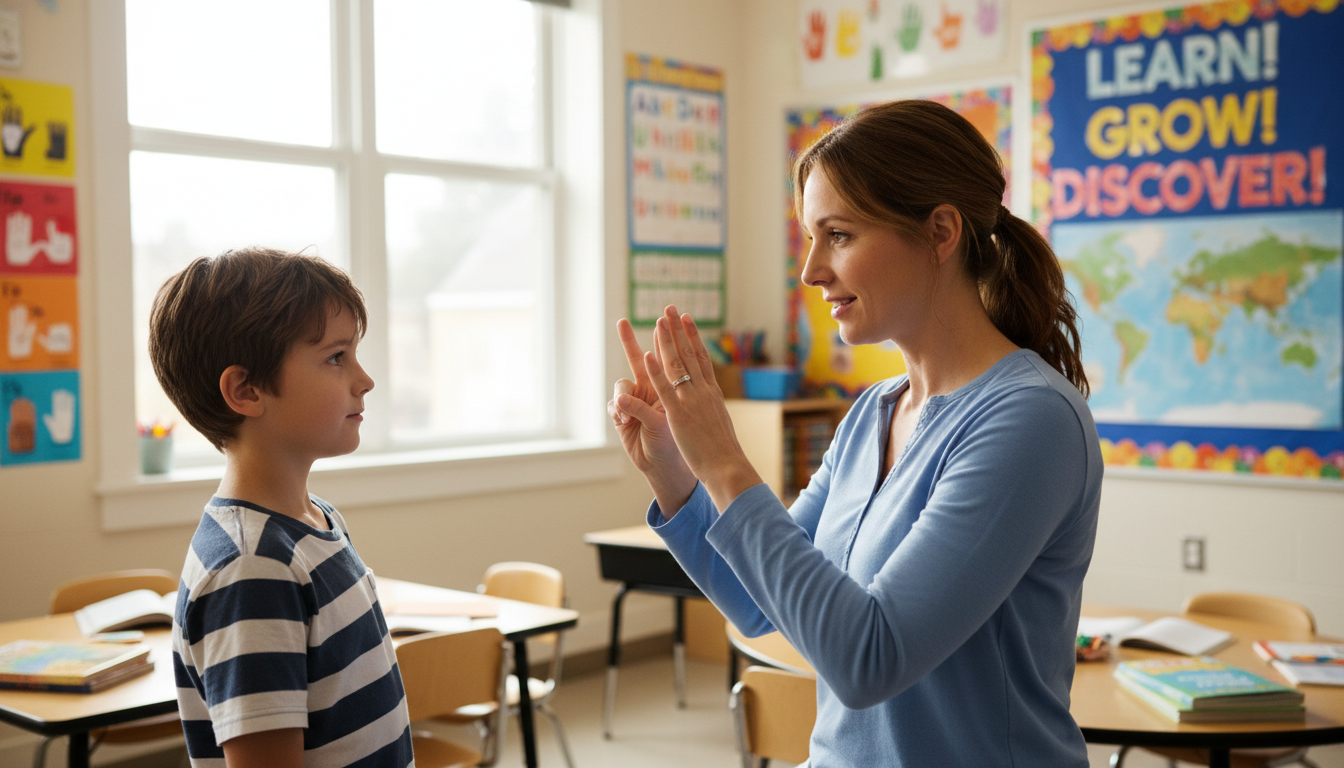
Connecting with a grandchild who is Deaf or Hard of Hearing requires a meaningful shift in perspective. Instead of viewing hearing loss as a condition to be managed, grandparents can focus on joining the journey of the child’s life. True inclusion means the child is not the only person responsible for bridging the communication gap. When you commit to learning ASL for grandparents through personal and family ASL classes, you demonstrate a willingness to meet the child halfway. This effort ensures the child does not have to carry the full burden of being understood.
In Deaf culture, facial expressions and body language are as vital as specific hand shapes. These non-manual markers convey tone, emotion, and even the grammatical structure of a sentence. For instance, a raised eyebrow or a specific tilt of the head can turn a simple sign into a question. Maintaining steady eye contact is also essential; it is a sign of respect and active listening that tells the child you are fully present in the conversation.
Practical environmental adjustments also make a significant difference in clarity. Ensure your face is well-lit and avoid standing in front of a bright window, which can create a distracting silhouette. When you need to get your grandchild’s attention, use culturally respectful methods such as a gentle wave within their peripheral vision or a light tap on the shoulder. These small but vital interactions show that you respect their primary way of navigating the world. Engaging in Deaf awareness training can further help grandparents understand these nuances, turning every visit into an opportunity for authentic connection.
Practical Ways to Practice ASL with Your Grandkids Every Day
Incorporating sign language into daily routines ensures that learning remains functional and fun. For those practicing ASL for grandparents, consistency is more effective than long, infrequent study sessions. Transforming a standard visit into an interactive experience helps both the adult and the child retain vocabulary through natural play.
Consider these practical activities for your next visit:
Interactive Storytime: Select a favorite picture book and identify three recurring characters or animals. Every time that character appears on the page, perform the sign together. This pairs the visual image in the book with the manual sign, reinforcing memory for both generations.
Kitchen Communication: The kitchen is a natural classroom for functional signs. Use signs for "milk," "cookie," "eat," or "more" while preparing a simple recipe or snack. These high-frequency signs demonstrate the immediate utility of the language.
The Reverse Mentor: Let the grandchild be the teacher. If the child is already learning through baby signing training, ask them to show you their favorite sign. This role reversal empowers the child and builds their confidence as a communicator.
For families who live apart, video calls offer a unique opportunity to maintain the bond. Establishing a "Special Sign of the Week" during your regular chats creates a shared goal and a reason for the child to look forward to the call. Focus on categories that interest them, such as colors, animals, or weather. If you find it difficult to master specific hand shapes through a screen, personal and family ASL classes provide the live, professional guidance needed to ensure your signs are clear and accurate for your next digital or in-person connection.
Choosing the Right Path: Why Live Classes Overcome Learning Hurdles

A common question arises when starting this journey: "How long does it usually take to learn ASL?" The answer depends on your definition of success. Achieving full, native-level fluency is a multi-year process, much like learning any foreign language. However, the philosophy at Easy Signing LLC focuses on immediate connection. Grandparents often find they can communicate basic needs and share meaningful signs with their grandchildren within the first few weeks of consistent practice. This early success provides the momentum needed to continue growing your vocabulary.
While mobile apps offer convenience, they lack the interactive nuances essential for mastering ASL for grandparents. Learning a visual language from a two-dimensional screen without feedback often leads to incorrect hand shapes or "lazy" signing that a child or a member of the Deaf community might struggle to understand. A live instructor provides real-time corrections, ensuring that your palm orientation, movement, and facial expressions are precise. This immediate feedback prevents the development of bad habits that are notoriously difficult to unlearn later.
Participating in personal and family ASL classes from the comfort of home removes the stress of a traditional classroom environment. Seniors particularly benefit from a supportive, live setting where they can ask questions and see their peers learning alongside them. This interactive format ensures you are using current, culturally accurate signs rather than outdated gestures found in static video archives. Choosing a live, guided path transforms the learning process from a solo chore into a shared family investment, providing the professional oversight necessary to communicate with confidence and clarity.


