ASL training for customer service staff creates an inclusive environment by equipping employees with essential signs and communication strategies to better serve Deaf or hard of hearing patrons. This training helps frontline teams avoid common service failures, such as communication fumbles, while building stronger brand loyalty through accessible and empathetic interactions.
Your customer service team likely prides itself on being helpful, yet they may feel completely paralyzed when a Deaf or hard of hearing individual walks through the door. This communication gap often leads to rushed interactions, misunderstandings, and a poor brand impression that drives potential loyalists away. Investing in American Sign Language training is no longer an optional perk; it is a fundamental business necessity for creating an inclusive environment. By bridging this gap, your staff gains the confidence to handle complex transactions with ease and respect. In this guide, we will examine how industry-specific signs can streamline operations in retail, finance, and hospitality. You will discover the practical differences between basic hand shapes and comprehensive Deaf awareness, ensuring your team provides a seamless experience for every customer who visits your Grayslake establishment or online platform.
The Communication Gap in Modern Retail and Service
Picture a typical weekday afternoon in a Grayslake retail boutique or a local bank branch. A customer approaches the counter and begins to sign. Immediately, the employee freezes; their eyes widen in a "deer in headlights" expression as they struggle to process an interaction they were never prepared for. This scenario is common across Illinois and the nation, yet it highlights a significant oversight in corporate development. While most companies invest heavily in verbal scripts and soft skills, they frequently overlook the communication needs of the 48 million Americans who are Deaf or hard of hearing.
The gap exists because specialized workplace and professional ASL training is rarely a standard component of onboarding. When staff members lack the tools for non-verbal communication, the results are predictable: the employee loses confidence, and the customer feels invisible. This barrier does more than just hinder a single transaction; it signals a lack of accessibility that can alienate a massive demographic. Effective ASL training for customer service staff addresses this by replacing panic with practical skills. Without foundational Deaf Awareness and culture education, businesses inadvertently create a environment where employees bolt to find a manager rather than engaging directly and respectfully with the person in front of them.
Why ASL Training for Customer Service Staff is a Business Necessity
Moving beyond ethical considerations, investing in workplace and professional ASL training provides a measurable return on investment. The Deaf community is highly interconnected; when a business in Grayslake or the surrounding Lake County area prioritizes accessibility, that information spreads rapidly through social networks and community groups. For a Deaf consumer, finding a location where they can interact directly with staff without a "middleman" is a rare and valued experience that builds intense brand loyalty. A customer who feels seen and understood becomes a frequent patron, often bypassing closer competitors who lack these communication skills.
This commercial necessity is amplified by the power of social proof. Deaf consumers are experts at navigating communication barriers and frequently share their experiences online. A positive interaction, such as a cashier who can sign basic instructions or a banker who understands visual cues, can lead to widespread community recommendations. Conversely, poor experiences carry significant weight. The "quarterback pass," where an employee panics and immediately bolts to find a manager, signals to the customer that they are a "problem" to be handled rather than a valued guest. In a localized market, these reputations are difficult to overwrite.
Providing ASL training for customer service staff allows a business to capture a market share of the 48 million Americans who are Deaf or hard of hearing. When employees pair functional signing with Deaf Awareness and culture education, they transition from "trying to help" to providing professional, streamlined service. This level of competence ensures that every customer, regardless of how they communicate, receives the same high standard of care, ultimately protecting the company’s local reputation and driving repeat revenue.
The Difference Between Basic Signs and Comprehensive Deaf Awareness
While memorizing the signs for "thank you" or "help" is a polite starting point, these gestures alone do not constitute true accessibility. Professional ASL training for customer service staff goes beyond vocabulary to address the mechanics of the environment and the cultural nuances that dictate a successful interaction. Comprehensive Deaf Awareness and culture education teaches employees that communication is a multi-sensory experience. This includes maintaining consistent eye contact, ensuring the employee’s face is well-lit, and being mindful of physical placement. For example, standing directly in front of a bright window creates a silhouette effect that makes lip-reading and seeing signs nearly impossible.
A common hallmark of unprofessional service is the "pen and paper fumble," where a staff member frantically searches for a scrap of paper or a working pen when they realize verbal communication is failing. Practical workplace and professional ASL training prepares staff to have these tools readily available and positioned at the counter before the customer arrives. Being prepared is a sign of respect; it shows the customer that your business anticipates their needs rather than treating their arrival as an emergency to be managed.
Understanding the 90 percent rule provides vital context for these interactions. Statistically, 90 percent of Deaf individuals are born to hearing parents. This means many Deaf customers have spent their lives navigating hearing environments and are already experts at bridging communication gaps. When employees understand this cultural background, they stop trying to "fix" the situation and instead focus on facilitating a clear exchange. Staff should relax and allow the customer to take the lead in the interaction. Training transforms an awkward, reactive encounter into a deliberate, inclusive process. By mastering these environmental and cultural factors, businesses move beyond performative gestures and toward functional equality in service.
Tailored ASL for Retail: Finding Sizes and Stock
In a retail setting, the objective of workplace and professional ASL training is not to achieve academic fluency; it is to facilitate functional independence for the shopper. When an employee can sign small, large, or extra-large without hesitation, they remove the friction often found in the fitting room experience. Practical instruction focuses on the high-frequency vocabulary specific to the sales floor, such as common colors and physical inventory locations.
Instead of pointing vaguely toward a staircase, a staff member equipped with ASL training for customer service staff can clearly indicate if an item is upstairs, downstairs, or in the back room. This precision respects the customer’s time and autonomy. Furthermore, being able to sign credit card, cash, or receipt streamlines the final transaction, ensuring the exchange remains professional and efficient. By mastering these targeted signs, retail workers provide a seamless experience where the Deaf customer can shop with the same ease as any other patron, bolstered by the foundational principles of Deaf Awareness and culture education.
ASL for Banking and Finance: Privacy and Security
Banking environments present unique challenges where privacy and security are paramount. While a notepad might suffice in a clothing store, writing down account balances, social security numbers, or sensitive transaction details in a crowded lobby creates a significant security risk. Passersby can easily glance at written notes; furthermore, the disposal of those notes requires extra care to prevent identity theft. This is where workplace and professional ASL training becomes a critical tool for financial institutions.
By implementing ASL training for customer service staff in the finance sector, banks can offer a more discreet and professional experience. Signing provides a visual, real-time channel that is far more private than traditional methods, allowing a teller or personal banker to confirm account details without leaving a paper trail for prying eyes. Coupled with Deaf Awareness and culture education, staff members learn to handle these interactions with the same level of confidentiality they provide to hearing clients. This professional approach ensures that financial discussions remain private, secure, and inclusive.
ASL for Restaurants: Ordering and Dietary Needs
In the high pressure environment of a busy restaurant, speed and accuracy are the benchmarks of quality service. For a Deaf diner, the primary pain point is often the risk of an incorrect order, particularly when dietary restrictions or life threatening allergies are involved. Specialized workplace and professional ASL training equips servers with the specific vocabulary to confirm critical details, such as dairy free, gluten free, or nut allergy, without the delay of passing notes back and forth. This precision ensures food safety and prevents the frustration of a meal being sent back to the kitchen, which disrupts both the guest experience and kitchen operations.
Beyond the initial order, ASL training for customer service staff streamlines the entire dining flow. Recognizing functional signs for more water, a refill, or the check allows for seamless transitions between courses. When a server can respond to these requests instantly, it eliminates the need for the customer to wave for attention or wait for a lull in service to communicate a simple need. By integrating these skills with Deaf Awareness and culture education, restaurant teams create an environment where Deaf patrons can enjoy a meal with the same fluidity and confidence as any other guest, turning a standard meal into a repeat visit.
Avoiding Common Customer Service Fails
Even the best intentions can lead to service breakdowns without proper preparation. One of the most alienating mistakes occurs when a staff member speaks in the third person, directing questions like "What does he want?" to a hearing companion instead of the Deaf customer. This approach strips the customer of their agency and creates an immediate barrier to inclusion. Expert Deaf Awareness and culture education teaches employees to keep their focus and eye contact squarely on the individual they are serving, acknowledging their presence and autonomy throughout the entire interaction.
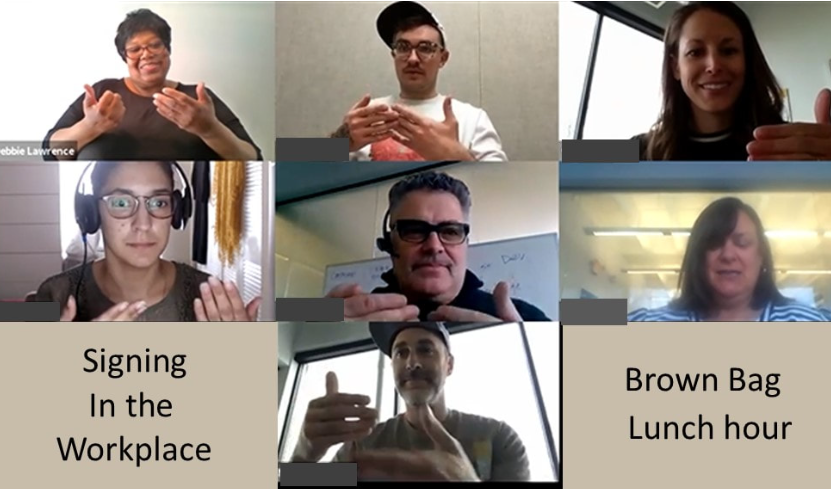
Other common pitfalls include the "deer in headlights" freeze or the "quarterback pass," where a worker abruptly leaves to find a supervisor instead of engaging. These reactions stem from a lack of confidence rather than a lack of kindness. Through live, interactive workplace and professional ASL training, staff can simulate these high pressure scenarios in a safe environment. Easy Signing LLC focuses on these real world rehearsals to ensure that when a Deaf customer walks through the door, the employee stays present and engaged. This proactive preparation replaces the instinct to flee with the ability to provide professional, uninterrupted service; staff learn to remain calm, utilize their communication toolkit, and follow the customer’s lead without hesitation.
Investing in Inclusive Culture in Grayslake and Beyond

Establishments throughout Grayslake and the broader Lake County area have a unique opportunity to lead the local market by prioritizing accessibility. While it is tempting to point employees toward free online videos or pre-recorded apps, these static resources often fail to translate into real-world competence. Generic tutorials lack the nuance of regional signs and cannot provide feedback on hand shape or movement, which are critical for clarity. By choosing customized, live online workplace and professional ASL training, local businesses ensure their teams are learning from experts who can correct mistakes and answer specific questions in real-time.
This interactive approach is what transforms a simple lesson into a lasting skill. Staff members at a Grayslake community bank or a Gurnee retail center benefit from curriculum tailored to their specific industry jargon and floor layouts. Furthermore, live sessions allow for deeper Deaf Awareness and culture education by addressing current community standards and etiquette that static videos miss. Investing in professional ASL training for customer service staff signals to the community that your business values authentic connection over a checkbox requirement. When staff can ask questions and practice with a live instructor, they gain the genuine confidence needed to serve every neighbor who walks through the door.
Ensuring your team knows basic ASL is a powerful way to empower inclusivity and improve the customer experience for the Deaf community. These small steps create a welcoming environment where everyone feels valued. If you want expert help building these skills within your organization, consider exploring our Workplace & Professional Training programs. We can help you design a curriculum that fits your specific business needs and ensures your staff feels confident in every interaction.


