
Research consistently shows that baby sign language does not delay speech; in fact, it often enhances early communication and reduces frustration for infants. Common baby sign language myths suggest that signing replaces vocalization, but studies demonstrate that babies who sign frequently develop larger spoken vocabularies faster than those who do not. Parents can successfully introduce signs as early as four to six months to bridge the gap between understanding and speaking.
As a parent, you likely feel the weight of every developmental decision, especially when well-meaning friends or online forums suggest that teaching your infant to sign might actually hinder their ability to speak. This constant stream of conflicting information creates a landscape of unnecessary anxiety during a time when you simply want to connect with your child. Understanding the reality behind these common misconceptions is essential; the bridge between frustration and clear communication often lies in evidence-based practices. In this guide, we will dismantle the most persistent myths regarding speech delays and IQ boosts. We will also explore the distinction between American Sign Language and simplified baby signs, while addressing cultural considerations and practical hurdles. By the end, you will have a clear, expert perspective on how to integrate signing into your daily routine in Grayslake without the weight of misinformation holding you back.
The Most Common Worry: Does Signing Delay Speech?
Many parents hesitate to start signing because they fear it will make their child lazy or delay the onset of spoken words. This is the most common concern we encounter at Easy Signing LLC, yet it is entirely unsupported by developmental science. In reality, addressing these baby sign language myths is crucial for parents who want to empower their children's early development; teaching a child to sign serves as a cognitive bridge to spoken language rather than a barrier.
Decades of research, most notably the landmark studies by Dr. Linda Acredolo and Dr. Susan Goodwyn, have debunked the idea that signs replace words. Their NIH-funded research followed infants for years and found that those who used signs actually spoke sooner and developed larger vocabularies than those who did not. This happens because signing reinforces the fundamental concept of symbolic communication, which is the idea that a specific action or symbol represents a specific thing. When a baby signs "milk," they are building the neural pathways required to eventually say the word.
When exploring the perceived disadvantages of baby sign language, some worry that a child will stop trying to vocalize if their needs are met through gestures. However, human infants are biologically predisposed to speak. Signing simply provides a functional tool during the months when fine motor skills in their hands develop faster than the complex muscles required for speech. By reducing the frustration of being misunderstood, our Baby Signing (Birth to 5) training helps foster a positive attitude toward communication. Far from causing a delay, this early interaction supports brain development and creates a stronger foundation for future learning in our Personal and Family ASL classes.
Myth: Baby Sign Language is a Simplified Version of ASL

A frequent misunderstanding involves the belief that "baby sign language" and American Sign Language (ASL) are interchangeable. In reality, the difference between ASL and baby sign language is a matter of linguistic integrity. Generic baby sign kits often utilize invented gestures that have no connection to a recognized language. While these arbitrary movements might serve a temporary purpose, they lack the structural foundation and cultural history inherent in ASL.
At Easy Signing LLC, we advocate for the use of authentic ASL signs in our Baby Signing (Birth to 5) training. ASL is a complete, complex language with its own specific grammar and syntax. By choosing real signs over invented gestures, you ensure your child is learning a functional skill that never becomes obsolete. If a child continues their journey into our Personal and Family ASL classes as they grow, they will not have to unlearn a set of "home signs" to communicate with the wider signing community.
Using real ASL is also an essential component of Deaf Awareness Training. It teaches children and families to respect the Deaf community by recognizing their language as a sophisticated communication system rather than a simplified parlor trick. This approach moves beyond common baby sign language myths, treating early communication as a doorway to lifelong inclusion and cultural respect.
Is Baby Sign Language Offensive? Understanding the Controversy

The discussion surrounding the baby sign controversy often stems from how sign language is presented to the hearing public. While teaching an infant to communicate is inherently positive, it can become culturally insensitive when American Sign Language is treated as a temporary fad or a parlor trick to demonstrate a child’s intelligence. The offense rarely lies in the act of signing itself, but rather in the appropriation of a complex, living language without acknowledging the community that created it. For members of the Deaf community, ASL is not a training wheels version of English; it is a primary language and a core part of their identity.
Easy Signing LLC addresses these concerns by grounding every program in respect and cultural context. We believe that early communication should be a bridge to inclusion, not just a developmental shortcut. This is why our Baby Signing (Birth to 5) training and Personal and Family ASL classes go beyond simple vocabulary. We teach families that when they sign, they are participating in a rich linguistic tradition.
To ensure parents move past common baby sign language myths and approach the practice with integrity, we integrate Deaf Awareness Training into our curriculum. This includes:
Teaching the history and importance of ASL as a complete language.
Emphasizing correct handshapes and facial expressions, which are linguistic requirements rather than optional additions.
Encouraging families to view signing as a lifelong skill that connects them to a broader community.
By shifting the focus from performance to connection, parents can provide their children with a functional tool while remaining respectful of the Deaf culture. This approach ensures that signing remains a bridge for communication rather than a source of cultural friction.
Can Babies Really Sign Before They Can Speak?
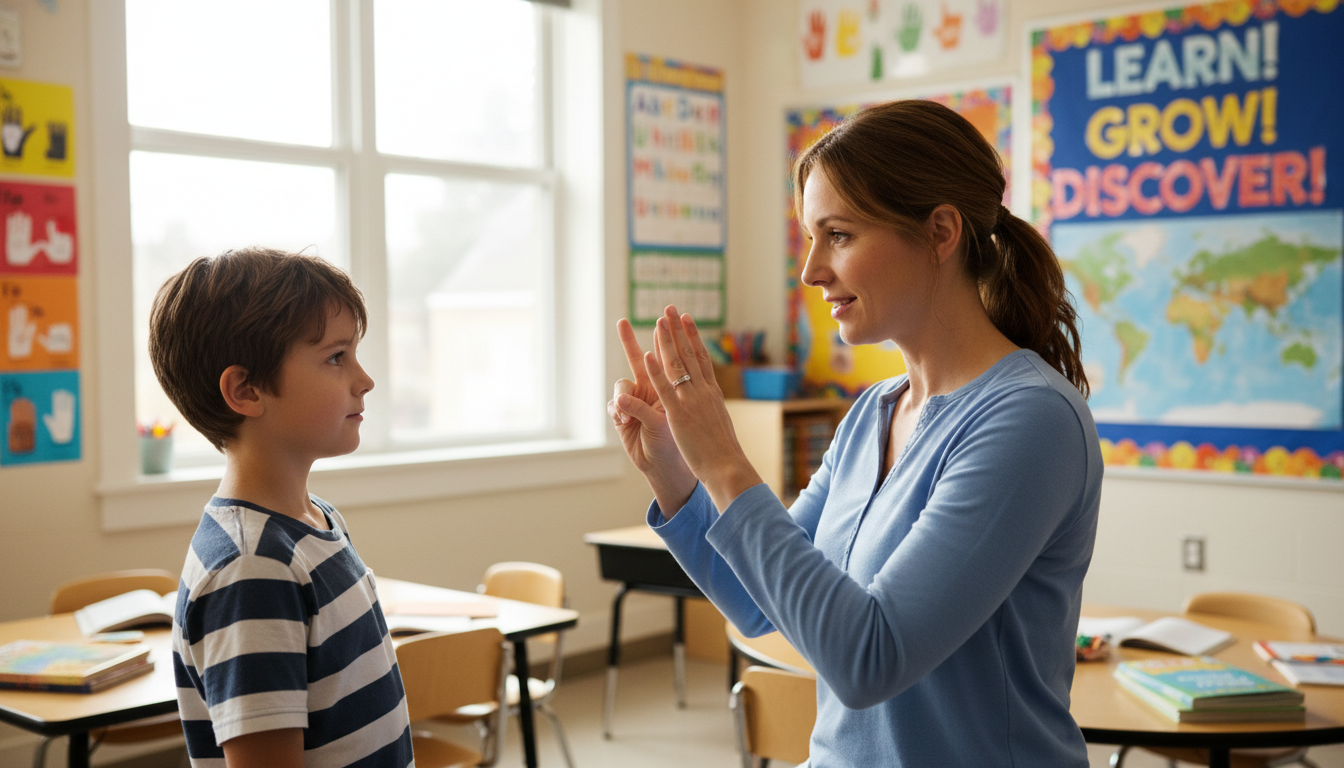
The physiological timeline of infant development supports the idea that babies can communicate through gestures before they can articulate complex speech. The large muscle groups in the arms and the fine motor control in the hands mature significantly earlier than the intricate coordination needed for the tongue, lips, and vocal folds. Consequently, many infants begin to produce intentional signs between six and nine months of age.
It is a common misconception that signing must precede speech in a linear fashion. In reality, these developmental tracks often overlap. By nine or ten months, a child might be experimenting with both manual signs and early vocalizations. The objective of our Baby Signing (Birth to 5) training is not simply to achieve an earlier communication milestone for its own sake. Instead, we aim to provide a functional tool for the window of time when a child’s cognitive desire to communicate outpaces their verbal clarity.
Using a baby sign language chart as a visual guide allows families to focus on high-value signs like milk, more, or help. These specific signs address immediate physical needs, significantly reducing the frustration and guesswork for caregivers. By providing a bridge during this transitional phase, signing supports the natural progression of language rather than replacing it.
Addressing the 'Genius Baby' Myth: Does Signing Increase IQ?
Many parents search for evidence that signing creates a "genius baby," often citing older research that suggested a long-term IQ boost. While these studies offered exciting possibilities, current developmental experts prefer to focus on measurable social and emotional outcomes rather than standardized testing scores. The idea that signing is a shortcut to academic giftedness is one of the more persistent baby sign language myths; in reality, the value of signing lies in the quality of the parent-child relationship.
When families participate in our Baby Signing (Birth to 5) training, the primary goal is connection, not competition. By giving a child a way to express their specific needs before they can speak, you significantly reduce the frequency and intensity of tantrums caused by communication breakdowns. This fosters a secure attachment and builds a stronger foundation for emotional regulation. Rather than viewing sign language as a cognitive performance tool, we treat it as a means of establishing deep, early bonds that support a child's overall wellbeing. This shift from competitive parenting to connection-based parenting ensures that communication remains a source of joy rather than a developmental benchmark.
The Practical Hurdles: Real Downsides and How to Overcome Them
While the developmental baby sign language myths are largely unfounded, parents do encounter genuine practical challenges. The primary downsides are not related to a child’s brain; they involve the logistics of daily life. Maintaining consistency when you are exhausted, or ensuring that grandparents and daycare providers understand your child’s signs, requires intentional planning. Parent fatigue is a real factor, as it is easy to forget to sign during a hectic morning routine.
To overcome these hurdles, we recommend a focused approach rather than trying to learn a massive vocabulary all at once. Start with three to five high-value signs that address immediate needs, such as milk, hungry, and please. This targeted list prevents overwhelm and allows you to build a solid foundation.
Integrating signs into existing routines is the most effective way to sustain the habit. Using baby sign language for potty time or during a diaper change provides clear context for the child and helps caregivers remember to use the movements. For families who need structured support to bridge the gap between home and outside caregivers, our Baby Signing (Birth to 5) training offers strategies to ensure everyone is on the same page. By keeping the initial scope small and routine-based, you turn signing from an extra chore into a seamless part of your daily interaction.
How to Start Signing with Your Baby in Grayslake
Moving from identifying hurdles to taking action requires a shift in perspective. Residents of Grayslake and the surrounding Lake County area often find that while books provide a static vocabulary, they lack the three dimensional nuance of hand shapes and facial expressions critical to American Sign Language. Live instruction, available through our Baby Signing (Birth to 5) training, ensures parents receive immediate feedback on their technique. This prevents the formation of unclear habits that can inadvertently fuel common baby sign language myths about signing being difficult for infants to master.
Effective signing should not feel like a scheduled lesson time. Instead, integrate signs into the rhythms of your day in Grayslake, such as visits to the local library or during dinner at home. Involve the whole household, including older siblings who often take great pride in being the first to understand the baby. Our Personal and Family ASL classes offer a space for the entire family to learn together, transforming a developmental tool into a shared language that enriches your home life.
Understanding the truth about baby sign language allows you to embrace this powerful tool without worry. Rather than delaying speech, signing creates a bridge for earlier communication while your child is still developing their vocal skills. If you are feeling uncertain about how to begin or simply want to ensure you are using the most effective techniques, expert guidance can make the process much smoother. Our Baby Signing (Birth–5) program provides the support you need to start this journey with confidence and clarity.


