Families can celebrate the holiday season by learning common Christmas ASL signs for greetings, festive vocabulary, and classic songs like Jingle Bells. This guide explains how to sign essential phrases and holiday favorites; it serves as a resource for improving communication and inclusion during seasonal gatherings.
The holidays are often a whirlwind of noise and overlapping conversations, yet for many families, these festive moments can inadvertently leave loved ones who rely on visual communication feeling sidelined. It is frustrating to watch the joy of the season pass by without the tools to fully participate in every song and story. Incorporating American Sign Language into your traditions is a practical way to foster genuine inclusion and deepen family bonds. By mastering a few key signs, you ensure that every holiday greeting and dinner table request is accessible to everyone. In this guide, you will learn the proper technique for seasonal greetings, discover the differences between conceptual ASL and Signed English for carols, and build a foundational vocabulary for holiday foods. We provide the expert guidance needed to transform your celebrations into a truly bilingual experience that honors the spirit of the season.
Why Learning Christmas ASL Signs Matters for Family Inclusion
Holiday gatherings are defined by the exchange of stories and the warmth of shared traditions. For many families, these moments are the highlight of the year. However, for Deaf or hard of hearing family members, the rapid pace of holiday crosstalk can inadvertently lead to a sense of isolation. When everyone is talking at once over a meal, those who rely on visual communication can feel left behind, even in a room full of loved ones.
At Easy Signing LLC, our mission is to provide families in Grayslake and across the country with the tools necessary to bridge this communication gap. Through Personal and Family ASL training, we help hearing individuals move beyond basic gestures to create a truly accessible environment. Integrating Christmas ASL signs into your festivities does more than just teach a new skill; it signals to your loved ones that their language is valued and respected.
Learning even a small handful of signs can transform a standard family dinner into an inclusive celebration. It allows a grandparent to sign 'I love you' across a noisy room or a child to ask for another cookie without a struggle. This effort fosters a deeper sense of belonging and ensures that everyone, regardless of their hearing status, is a full participant in the holiday joy. By engaging with Community and Faith-Based Programs, families can build the confidence needed to make every guest feel seen and heard.
Essential Christmas ASL Signs for Beginners and Kids

Building a foundation for communication starts with high-frequency vocabulary that captures the magic of the season. For children and adult beginners alike, these signs provide immediate ways to participate in holiday traditions. When practicing these Christmas ASL signs, remember that clarity comes from consistent handshapes and movements within your signing space.
Christmas: Form a 'C' handshape with your dominant hand, palm facing outward. Move your hand in an arc from one side of your chest to the other, as if tracing the top of a wreath. Pro-tip: Avoid making the arc too wide; keep the movement contained within the width of your shoulders to ensure you remain easy to follow.
Santa Claus: Use a curved 'C' handshape starting at your chin. Move the hand outward and down in a rounded motion to mimic the shape of a large, bushy beard. Pro-tip: ASL utilizes facial grammar to convey emotion. For Santa, a joyful, wide-eyed expression and a slight smile are essential to capturing his jolly character.
Christmas Tree: First, perform the 'C' arc for 'Christmas.' Then, rest your dominant elbow on the back of your non-dominant hand, which should be flat and palm-down. Wiggle the fingers of your upright dominant hand while twisting your wrist slightly. Pro-tip: Ensure your 'tree' stays vertical; leaning the hand too far can make the sign look like a falling branch.
Gift/Present: Hook both index fingers into 'X' handshapes. Start with your hands near your chest and move them forward together as if you are handing a box to a friend.
Reindeer: Place the thumbs of your open '5' hands (fingers spread) against your temples. This represents antlers. Pro-tip: Keep your fingers stiff rather than floppy to clearly distinguish antlers from other animal signs.
Snow: Hold both hands high with fingers spread and relaxed. Wiggle your fingers gently while slowly moving your hands downward toward your waist. Pro-tip: Match the speed of your fingers to the 'type' of snow. Slow, rhythmic wiggling communicates a calm, peaceful snowfall.
Incorporating these signs into your Personal and Family ASL training allows everyone to engage with the environment. When a child can sign 'Snow' while looking out the window or 'Gift' while under the tree, they are not just learning labels; they are building a bridge to the people around them.
How to Sign Merry Christmas and Happy Holidays with Proper Technique
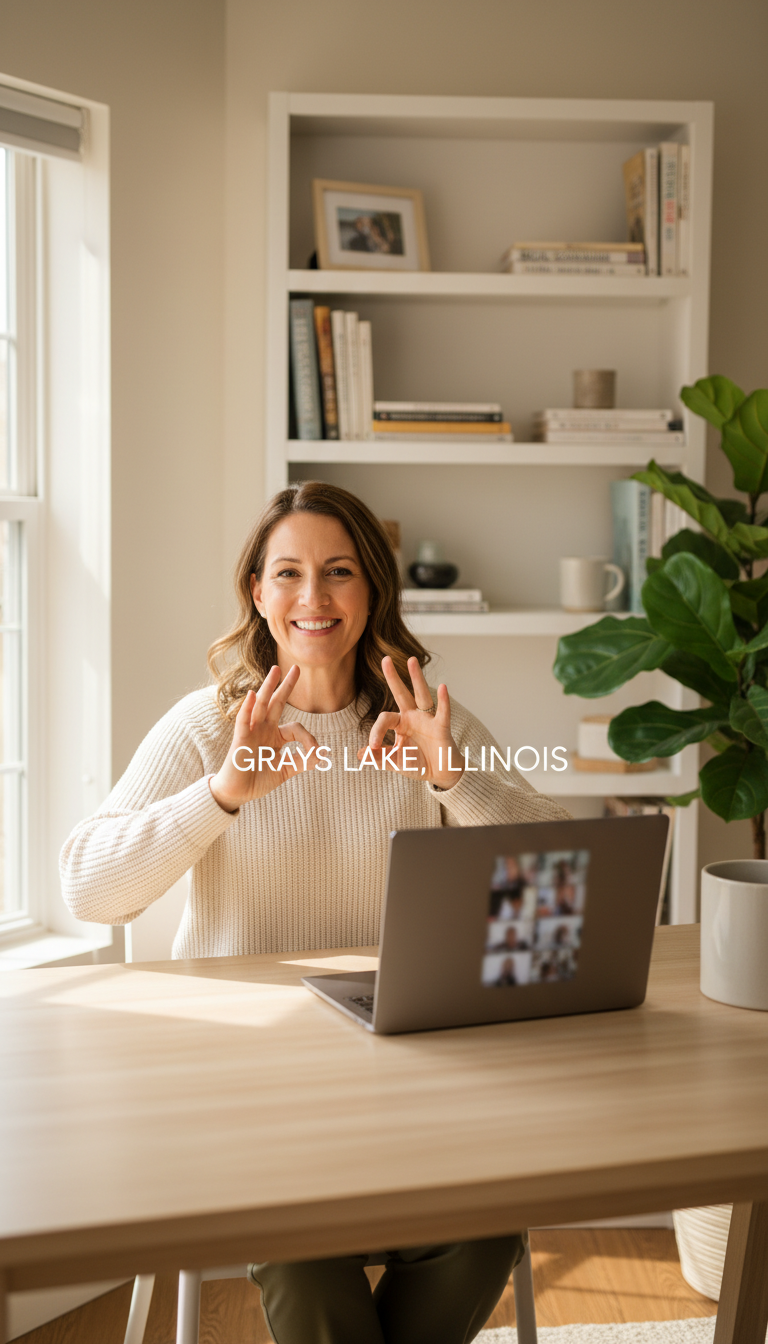
To properly answer how to say merry Christmas in sign language asl, you must look beyond individual words and focus on the fluid transition between signs. A greeting is more than a vocabulary list; it is a sentiment delivered with rhythm and intentionality. Mastering this flow is a core component of Personal and Family ASL training, as it helps learners move from robotic movements to natural, expressive conversation.
To sign "Merry," which is identical to the sign for "Happy," brush your palm upward against your chest in a forward, circular motion. A mark of an expert signer, often highlighted by linguistic resources like Handspeak, is the specific handshape used during this movement. While many beginners default to a spread "5" handshape where the thumb sticks out, a more precise technique involves the "4" handshape. By keeping the fingers together or the thumb tucked, the sign appears more distinct and intentional. This subtle adjustment prevents the sign from looking sloppy and ensures clarity for the recipient. After the upward brush of the hand, immediately transition into the "C" arc for "Christmas."
If you prefer the more inclusive "Happy Holidays," follow the same motion for "Happy" and then transition to "Holidays." This sign uses the "5" handshape with thumbs touching the chest area, near the shoulders or armpits, typically in a rhythmic double tapping motion. Because this same sign is used for "Vacation," it perfectly captures the spirit of a seasonal break from daily routines.
To make these Christmas ASL signs look authentic, emphasize the glide between the two words. As you finish the upward motion of "Merry," your hand should already be shifting toward the starting position for the next sign. Eliminating the pause between words makes your holiday wishes feel sincere and polished rather than rehearsed.
Signing Holiday Songs: ASL vs. Signed English
Moving from short greetings to the cadence of Christmas Songs in ASL requires an understanding of how music is interpreted visually. Many beginners ask how to sign songs, and the answer depends on the distinction between Signed English and American Sign Language. Signed English follows the word order of the song exactly. This method is often utilized in Community and Faith-Based Programs for preschoolers because it helps hearing children associate a specific sign with a spoken word. It provides a structured, predictable way to introduce Christmas ASL signs in a group setting.
In contrast, true ASL focuses on the concept or the underlying meaning of the lyrics rather than a literal, word for word translation. ASL is a distinct language with its own grammar and visual syntax. When translating a holiday classic, a signer might prioritize the visual imagery of the story. For example, if a lyric mentions a 'cold' winter night, an ASL interpretation might emphasize the shivering sensation or the biting wind rather than just the dictionary sign for 'cold.' Understanding this distinction is a vital part of Personal and Family ASL training. It moves the experience away from a simple performance of hand gestures and toward a meaningful communication of the holiday spirit that resonates with the Deaf community.
Popular Holiday Song Tutorials for Families

Starting with a favorite like Jingle Bells allows families to practice rhythmic, high energy Christmas ASL signs that are easy to remember. For the chorus, focus on the most iconic images. To sign bell, use your dominant index finger to strike the palm of your flat non-dominant hand, then pull it away slightly to show the vibration of the sound. For horse, place your thumbs at your temples with your index and middle fingers extended and together, then flap them twice like animal ears. To capture the spirit of laughing, use both index fingers near the corners of your mouth, moving them in small, upbeat circles to mimic a smile. These signs are particularly effective as easy christmas sign language songs for preschoolers because the repetitive jingle all the way chorus reinforces the movements through constant practice.
Silent Night offers a slower, more meditative pace, making it a staple in Community and Faith-Based Programs. This song relies on smooth, flowing transitions to convey its meaning. To sign silent, place your index finger to your lips in a shushing gesture, then move both hands away from your face and downward in a calm, outward motion. Night is signed by resting your curved dominant wrist on the back of your non-dominant hand, which is held horizontally, mimicking the sun dipping below the horizon. For holy, move an H handshape in a small circle above your flat non-dominant palm, then slide it across the palm toward your fingertips. Finally, for calm, hold both palms flat in front of you and move them slowly downward, signaling stillness.
Practicing these Christmas Songs in ASL does not require a formal classroom setting. You can integrate them into your daily routine by signing along to the radio during car rides through Grayslake or while decorating the tree at home. This casual repetition helps solidify the vocabulary in a low pressure environment. For those looking to refine their technique, Personal and Family ASL training can provide the nuanced feedback needed to move from basic gestures to fluid, expressive signing that captures the true emotion of these holiday classics.
Signs for Your Holiday Table: Food and Family Gatherings
Moving from the symbolic imagery of songs to the practicalities of a shared meal allows you to apply Christmas ASL signs in real-time. The dinner table is often where communication barriers are most felt, but it is also the best place to practice functional, high-impact vocabulary. By incorporating these signs into your mealtime routine, you move beyond simple performance and into genuine connection.
Family: Form 'F' handshapes with both hands, touching your index fingers and thumbs together in front of you. Move your hands in an outward circle until your pinkies meet, representing the complete circle of the household.
Eat/Food: Bring a flattened 'O' handshape, where your fingers touch your thumb, to your mouth and tap it twice.
Cookie: Place your non-dominant hand flat with the palm up. Use your dominant hand in a claw shape to twist against the palm, mimicking the motion of a cookie cutter.
Candy Cane: Sign 'Candy' by twisting your index finger against your cheek, then immediately use that finger to trace a small hook shape in the air.
Thankful: Place both flat hands at your chin with palms facing you, then move them forward and down in a graceful arc toward the group.
To use these in a sentence, try signing "Family eat" to announce dinner or "I thankful for family" during a holiday toast. This approach, a key element of Personal and Family ASL training, ensures that every guest at your Grayslake gathering can participate in the conversation. These interactions transform the meal into a space of active inclusion rather than just a place to sit.
Common Questions About ASL and the Holidays
As you integrate Christmas ASL signs into your routine, you may encounter specific terms that fall outside the standard vocabulary list. These quick answers help clarify common linguistic nuances for a more inclusive season.
Are the signs for Hanukkah and Kwanzaa different? Yes, each holiday has its own distinct sign. To sign Hanukkah, hold up both hands in '4' handshapes to represent the eight candles. Start with your index fingers touching in front of you, then pull your hands apart to the sides. For Kwanzaa, use your hands to represent the seven candles of the kinara by moving your hands from the center outward in a slight arc.
How do you sign Vacation? In ASL, the signs for "Holiday" and "Vacation" are identical. Use open '5' handshapes with your thumbs touching the area near your armpits or upper chest, tapping twice in a rhythmic motion.
What is the sign for Jesus? Often used in Community and Faith-Based Programs, this sign involves touching the tip of your dominant middle finger to the center of your non-dominant palm, then repeating the motion with your non-dominant middle finger to your dominant palm. This visual represents the nails in his hands.
For families looking to expand their skills further, including learning Christmas Songs in ASL, our Personal and Family ASL training provides the customized support needed to foster meaningful connections throughout the year.
Incorporating these holiday signs into your celebrations is a beautiful way to foster inclusion and connection with your loved ones. While practicing these festive basics is a great start, you may find that you want to expand your vocabulary even further. If you are looking for expert support to guide your learning journey, our Personal & Family ASL resources are designed to help your household thrive. Taking that next step can turn these seasonal gestures into a lifelong skill for your entire family.