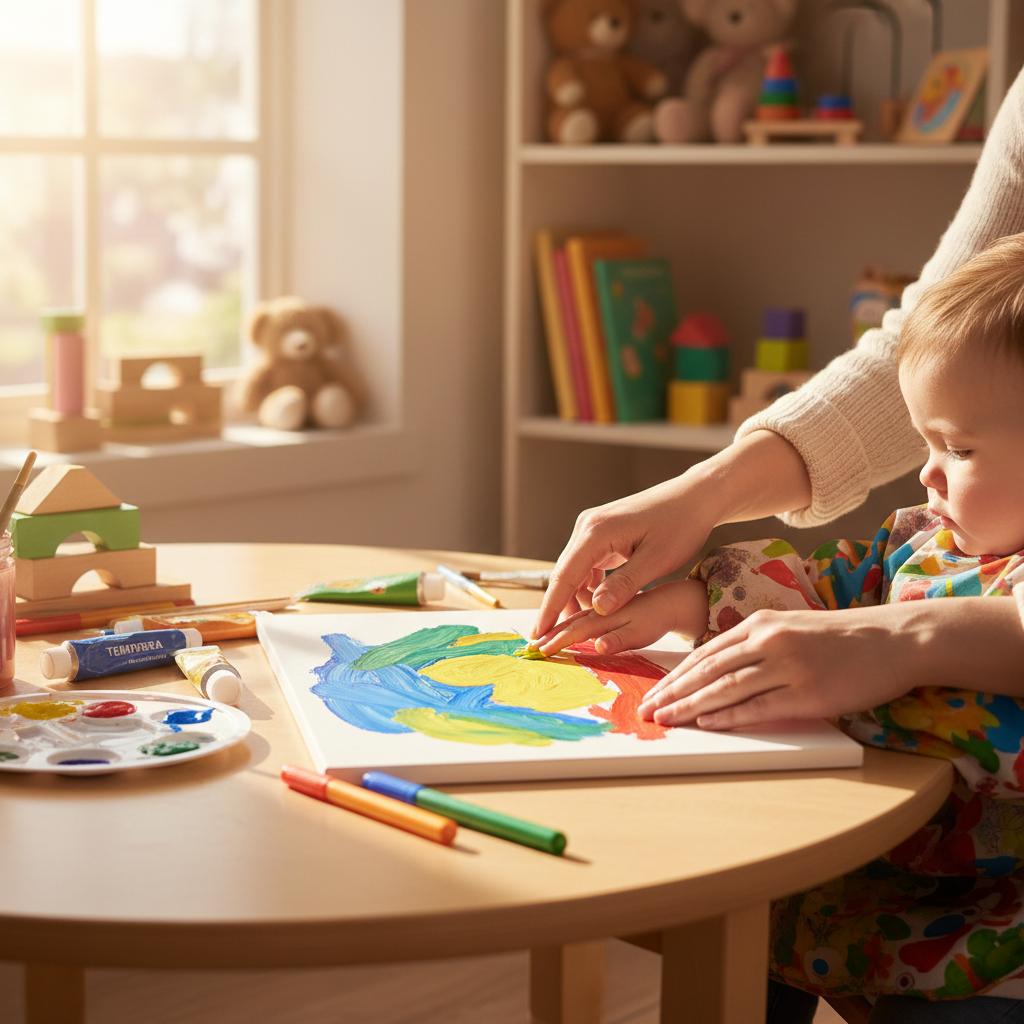
Learning ASL as a family for a deaf child provides the early language access necessary for healthy cognitive development and academic success. By practicing together, families create an inclusive home environment that prevents language deprivation and fosters a deeper emotional bond through clear, accessible communication.
When a child is deaf, the quiet moments at the family dinner table can often feel like a barrier rather than a bond. You may worry that your child is observing life rather than participating in it, missing the jokes, stories, and connections that define a home. Learning American Sign Language as a collective family unit is the most effective way to dismantle these barriers and ensure your child feels fully seen. This commitment goes beyond basic vocabulary; it is about building a foundation of shared identity and deep inclusion. In this guide, we examine why involving siblings and grandparents is essential for a child's development. We provide practical strategies for integrating signs into your daily routine and address the common myths surrounding fluency. Finally, we will help you evaluate live online classes against mobile apps to find the best support for your family.
Why Hearing Families Choose to Learn ASL Together
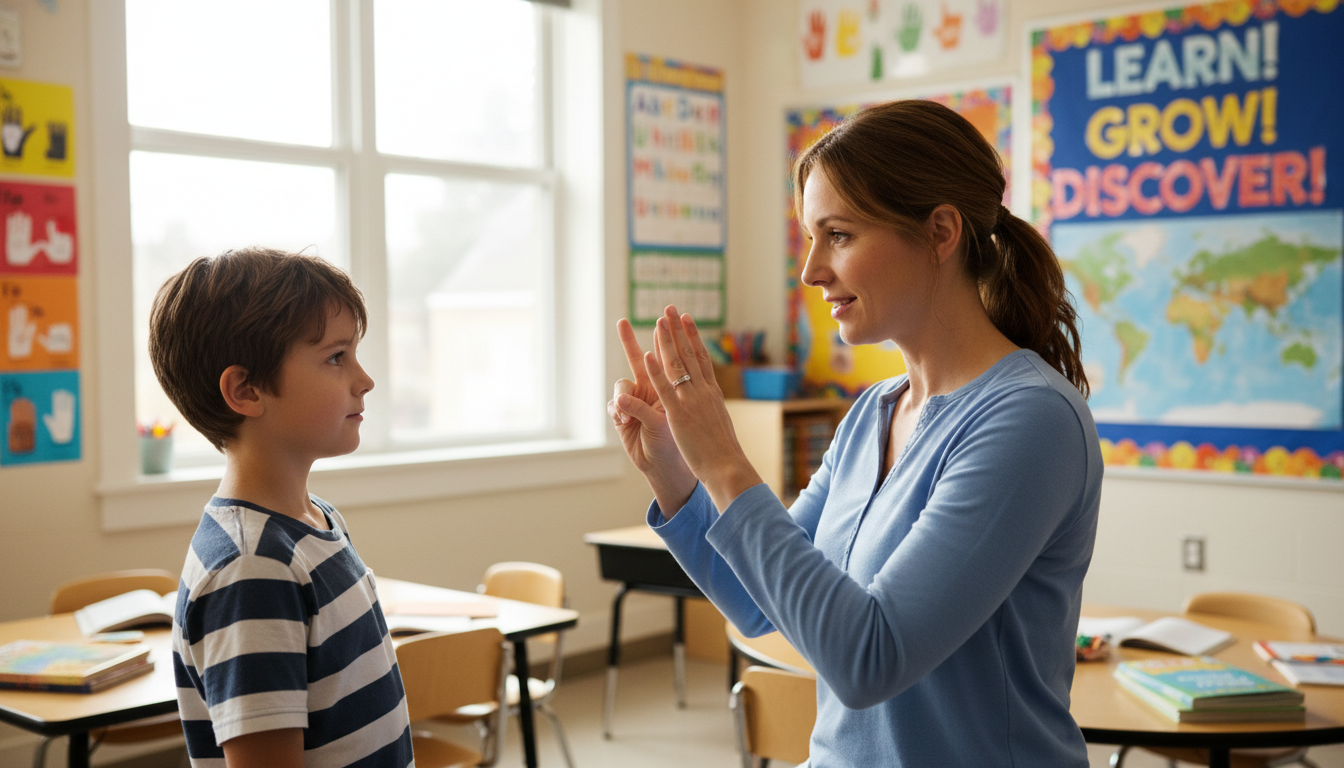
Approximately 95 percent of Deaf children are born to hearing parents, a statistic that highlights a significant communication gap within the home. Despite this high percentage, research indicates that only a small fraction of these families ever become proficient in American Sign Language. This often happens because families are directed toward speech-only approaches, yet the decision to prioritize learning ASL as a family for a deaf child is one of the most effective ways to support a child's neurological and emotional growth from day one.
The scientific rationale for early ASL acquisition centers on the prevention of language deprivation. When a child lacks access to a clear, fully accessible language during their formative years, the brain may miss critical developmental milestones related to logic, memory, and social cognition. By providing a solid sign language foundation at home, parents ensure their child has the tools to process the world around them without delay. Children with early access to ASL often reach cognitive and literacy milestones at the same rate as their hearing peers, as the brain prioritizes the quality of language input over the auditory or visual medium through which it is received.
On an emotional level, Personal and Family ASL training bridges the gap between being physically present and being truly included. When parents and caregivers learn to sign, the child is no longer a passive observer in their own home. They can participate in spontaneous dinner table conversations, share secrets, and express complex feelings without the barrier of a language they cannot fully hear. This inclusion is vital for psychological well-being and social bonding, as it validates the child’s identity and fosters a sense of belonging. Through foundational Deaf Awareness Training, families can move beyond simple vocabulary to understand the cultural context that makes these connections even deeper. By choosing to learn together, families shift the focus from managing a disability to building a rich, accessible life of mutual understanding.
Beyond Parents: Why Siblings and Grandparents Need to Learn ASL
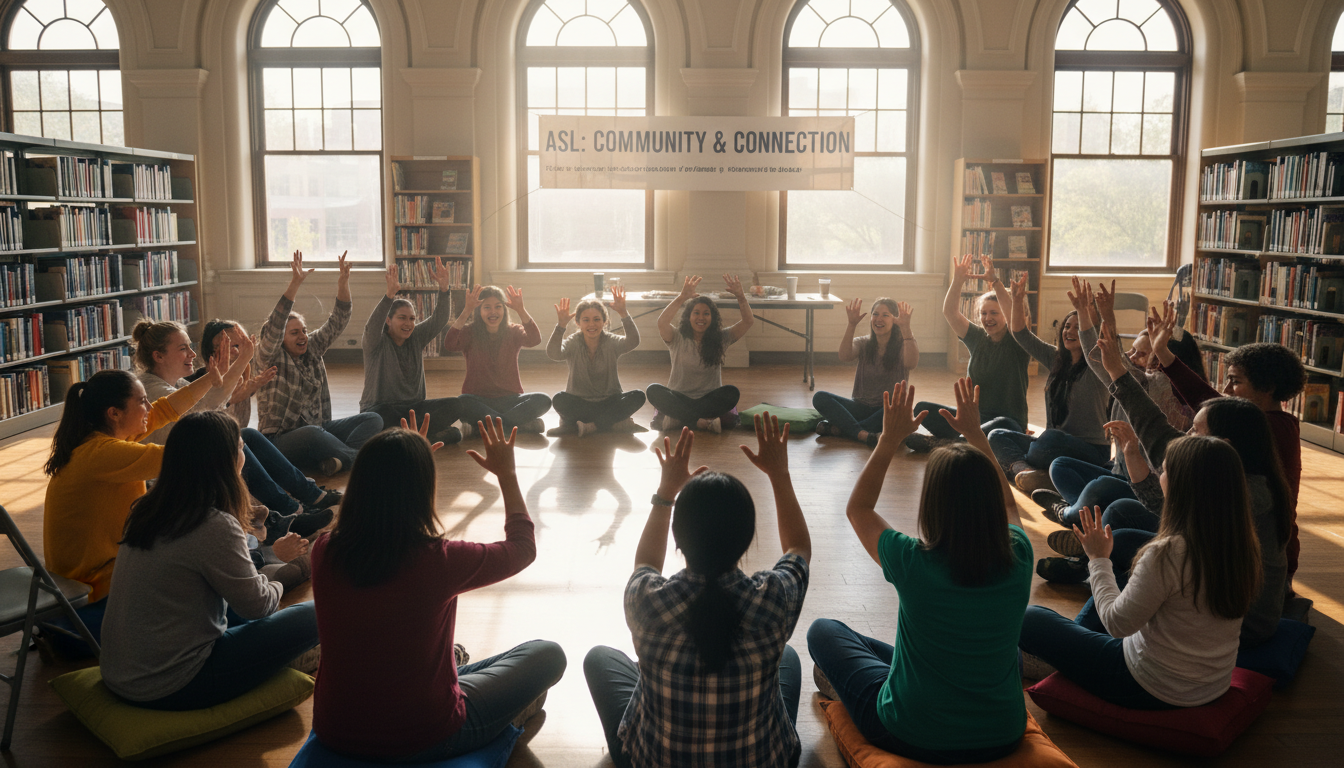
This mutual understanding is most effective when it encompasses the child’s entire domestic circle. While parents are the primary advocates, a child’s social world includes the people they interact with every day. When siblings and grandparents commit to learning ASL as a family for a deaf child, they dismantle the communication barriers that can lead to social isolation within the home.
For siblings, sign language is the bridge to genuine peer bonding and shared play. Play is a child’s primary way of learning social cues; without a shared language, siblings cannot easily negotiate the rules of a game, whisper secrets, or resolve the small conflicts that build lifelong trust. Parents can involve hearing siblings by turning practice into a game. Using visual activities like "Sign Language I Spy" or incorporating signs into popular board games helps children view ASL as a fun, natural part of their relationship rather than a chore.
Grandparents often provide essential childcare and act as the keepers of family legacy. Their involvement ensures the child can receive care safely and hear family stories directly. For older adults who may feel intimidated by a new language, starting with functional, daily routine signs for snacks, safety, and comfort provides a practical entry point.
At Easy Signing LLC, we recognize that different generations learn at different speeds. Our Personal and Family ASL training offers customized sessions that can be tailored to accommodate everyone from a curious toddler to a grandparent. This inclusive approach ensures that every family member has the tools to foster a sense of belonging, making the home a truly accessible environment for everyone involved.
Practical Tips for Integrating ASL Into Your Daily Family Routine
Moving from theory to practice requires looking at the clock rather than the textbook. The most effective way to begin learning ASL as a family for a deaf child is by attaching signs to established routines. By focusing on high-value signs, you provide immediate utility that reduces frustration for both parent and child. Start with these essential clusters during the parts of the day where communication is most frequent:
Routine | Recommended High-Value Signs |
|---|---|
Mealtime | EAT, DRINK, MORE, ALL-DONE, WANT |
Bath time | WATER, SOAP, TOWEL, BUBBLES, CLEAN |
Bedtime | SLEEP, BOOK, LOVE, LIGHTS-OFF, TOMORROW |
It is normal for hearing families to feel overwhelmed by the transition from a spoken language to a visual one. In the beginning, you might use sign-supported speech, which involves signing key words while speaking English sentences. This helps you get comfortable with the hand shapes and movements in real-time. However, as your confidence grows through Personal and Family ASL training, the goal should eventually shift toward ASL structure. Because ASL is a distinct language with its own unique grammar, moving toward this structure is essential for providing your child with full linguistic access.
Consistency is more important than speed. A simple way to keep everyone accountable is to designate a sign of the week. Post the word on the refrigerator along with a diagram or a photo of the family member performing the sign. This visual reminder prompts siblings, parents, and visiting grandparents to practice that specific concept throughout the day. Integrating these moments into your existing schedule ensures that Deaf Awareness Training becomes a lifestyle rather than a weekly chore.
Addressing the Fluency Myth: How Much Sign Language Do You Need to Know?
Many parents feel paralyzed by the pressure to achieve instant fluency, fearing that anything less than perfection hinders their child’s development. This misconception suggests that unless a parent can interpret a complex conversation, they are failing. In reality, the most critical element of learning ASL as a family for a deaf child is the commitment to progress, not the immediate mastery of every linguistic nuance.
Fluency is a long-term journey, but connection happens in the immediate moment. You do not need the technical speed of a professional interpreter to be an effective communicator for your child. Even a foundational vocabulary of one hundred signs can drastically reduce daily frustration and eliminate the feeling of isolation during family gatherings. While ASL is a sophisticated language with its own distinct grammar, it is not too tough to learn if you approach it systematically. The difficulty often lies in the shift from auditory to visual processing, a hurdle that Personal and Family ASL training helps families navigate by focusing on practical, high-impact communication.
The goal is to be a consistent learner rather than a perfect one. By showing up and signing every day, you model persistence and demonstrate that you value your child’s primary language. If you feel overwhelmed, you can Meet Debbie to learn how we structure our sessions to make these milestones achievable for busy hearing households. Integrating Deaf Awareness Training alongside vocabulary ensures that your efforts remain focused on building a bridge of mutual respect and understanding.
Navigating Deaf Culture and the Role of Hearing Instructors
Understanding the cultural context of American Sign Language is as important as mastering the signs themselves. A common question among new learners is whether it is appropriate for a hearing person to teach ASL. The short answer involves a respectful appreciation for the Deaf community. Learning from Deaf native signers remains the gold standard for full cultural immersion and linguistic nuance; however, hearing instructors serve a specific, vital role as bridges for those just beginning their journey.
Hearing instructors, such as the team at Easy Signing LLC, empathize with the unique linguistic and emotional hurdles that hearing parents face. They understand the struggle of retraining a brain that has relied on sound for decades to prioritize visual information. When you start Personal and Family ASL training, having an instructor who has successfully navigated that same transition can provide a sense of security. You can Meet Debbie to see how her experience as a hearing professional allows her to translate complex concepts into manageable steps for families who are feeling overwhelmed by their new circumstances.
While providing foundational vocabulary, Easy Signing LLC prioritizes Deaf Awareness Training to ensure families do not learn the language in a vacuum. This approach prepares you to engage deeply and respectfully with the Deaf community later on. The goal of learning ASL as a family for a deaf child is not to remain within a hearing bubble, but to gain the skills and cultural sensitivity needed to step confidently into Deaf spaces. By starting with an instructor who understands your specific starting point, you build the necessary foundation to become a lifelong ally and a proficient communicator.
Finding the Right Support: Live Online Classes vs Mobile Apps
Families often start their journey by downloading a mobile app, hoping for a convenient way to fit language acquisition into a busy schedule. While apps serve as helpful digital flashcards for individual vocabulary words, they frequently fall short for those learning ASL as a family for a deaf child. American Sign Language is a spatial, three-dimensional language that relies heavily on non-manual markers, such as facial expressions and body shifts. A static video or an automated app cannot provide the real-time feedback necessary to ensure your hand shape, palm orientation, or movement is correct. Without an instructor to catch these nuances, families risk developing incorrect signs that can lead to frustration and confusion for their child.
Live, interactive online classes provide a dynamic environment that apps simply cannot replicate. In a live setting, you have the opportunity to ask questions tailored to your specific household needs. You might need the sign for a specific medical device, a unique family nickname, or a favorite local park. Personal and Family ASL training through Easy Signing LLC allows for this level of customization, ensuring the signs you learn are immediately applicable to your child’s daily life.
Feature | Mobile Apps | Live Online Classes (Easy Signing LLC) |
|---|---|---|
Real-time Feedback | None | Immediate correction by a professional |
Grammar & Nuance | Limited to single words | Focus on facial expressions and syntax |
Customization | One-size-fits-all | Tailored to your family's specific needs |
Cultural Context | Often omitted | Integrated Deaf Awareness Training |
Choosing a live format means you are not just watching a screen; you are engaging in a conversation. You can Meet Debbie to see how our structured, live sessions help families transition from isolated words to meaningful communication. This interactive approach fosters the confidence needed to use ASL naturally within the home, providing the consistent, high-quality linguistic support your child deserves.


